
What to Mail Between November and January
Last Reviewed: October 2026
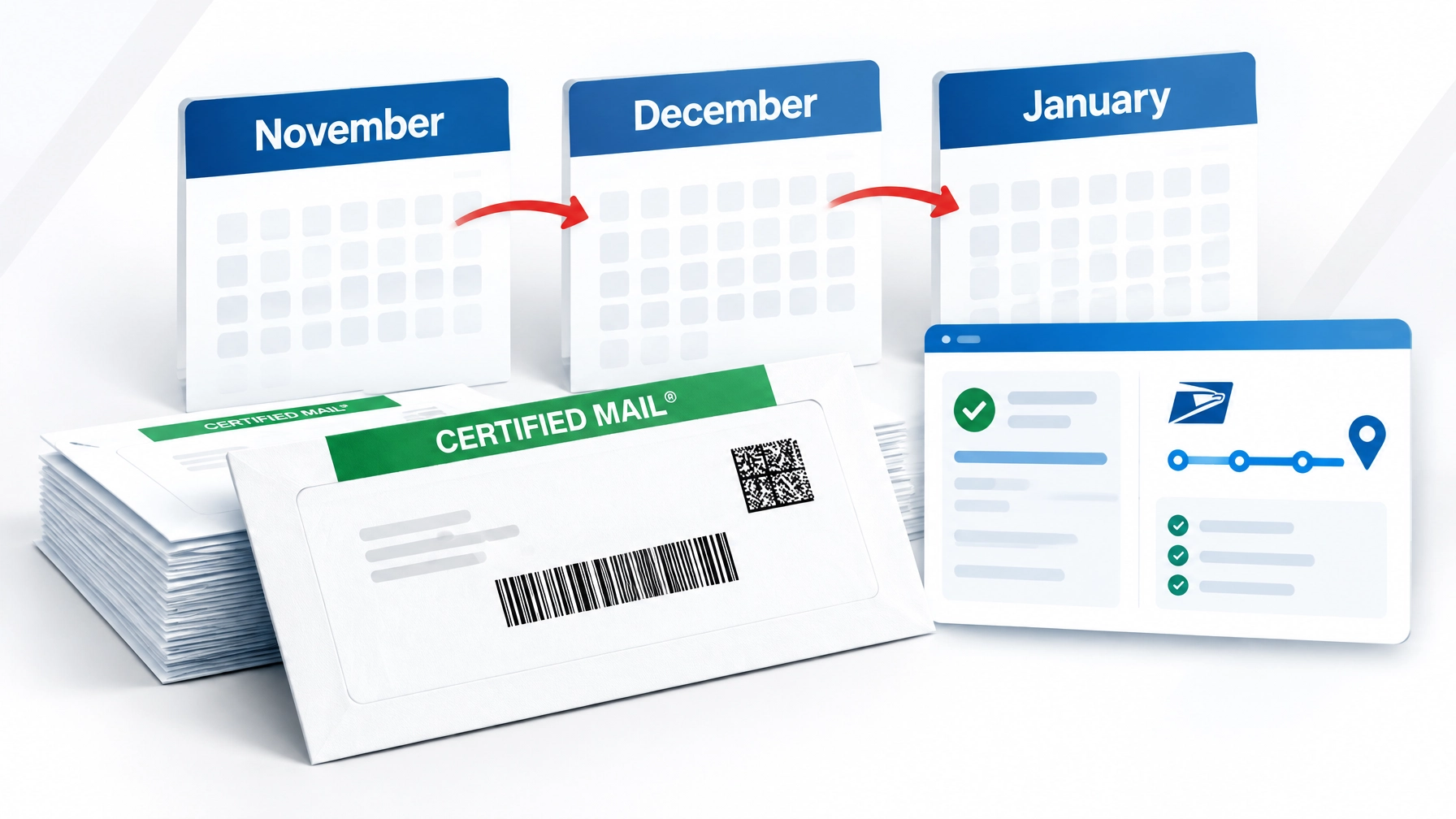
If you manage compliance mailings, use November through January to plan notices, statements, renewals, and other time-sensitive correspondence before holiday schedules and year-end workloads make the process harder. Start by checking the deadline and delivery requirements for each notice, then build in time to prepare, mail, track, and document it.
Why Plan Your Compliance Mailings Before The Holiday Rush?
The end of the year can bring a high volume of notices and competing administrative work. A calendar helps you see what needs attention, who owns each step, and which mailings need extra time for review or follow-up.
It can also help you avoid a common mistake: assuming that a holiday mailing schedule changes a legal or contractual deadline. It does not. Always confirm each notice’s requirements with the applicable rule, agreement, order, or internal compliance guidance. Use USPS holiday and service information to plan operations, not to determine legal deadlines.
Here are practical benefits of planning ahead:
- You’ll have time to review notice templates and recipient lists.
- You’ll spot missing addresses and duplicate records before production.
- You’ll have more room to resolve printing, postage, and mailing exceptions.
- You’ll create a consistent record of what was approved and mailed.
- You won’t need to rely on a last-minute mailing as your standard process.
What Should You Mail In November?
Use November to identify mailings due before the end of the year and those that take effect at the start of the new year. Examples may include customer or account notices, property communications, employment and benefits documents, policy updates, renewal notices, and formal correspondence. Your organization’s requirements will determine what applies.
Start with a single inventory. For each mailing, record the audience, responsible owner, approval status, required delivery method, target mailing date, and follow-up plan. Confirm whether the notice must use a particular postal service. Certified Mail is not automatically required for every compliance notice; use the method specified by the applicable requirement or your organization’s documented process.
Before sending a larger mailing, reconcile the recipient list against the approved population. Confirm addresses, review the final document, and check that attachments and enclosures are included. If timing is important, leave a practical buffer for preparation and postal operations.
Explore our online Certified Mail options to prepare mailings without making a trip to the Post Office.
What Should You Mail In December?
December is a good time to complete planned year-end mailings and prepare correspondence with an early-January effective date. Avoid making the busiest part of the holiday season your default production window for important notices. USPS operating schedules and service conditions can vary, so check the USPS holiday information and service alerts before mailing.
Create a short final-review checklist for each run:
- Confirm the approved notice version and recipient list.
- Verify addresses and resolve obvious data issues.
- Check that the selected mailing method matches the applicable requirement.
- Keep a record of what was approved, printed, and handed to USPS.
- Assign someone to monitor tracking, delivery results, and returned mail.
For high-volume correspondence, using one repeatable process can reduce manual steps. Uploading a PDF and address list for printing and mailing can help your team handle production while keeping attention on approvals and exceptions. With Certified Mail Labels’ print-and-mail service, your documents can be prepared and mailed on the same business day for orders received before the stated cutoff. Review current service details before placing an order.
What Should You Mail In January?
Use January to send correspondence that takes effect at the start of the year, complete mailings intentionally held for the new year, and resolve exceptions from earlier runs. Assign an owner to check for returned mail, incomplete delivery records, and address problems. Document any decision to resend or use another approved method.
January is also a useful time to close the mailing file from the previous cycle. Compare the approved recipient population with the final production record. Confirm that the files for each mailing include the final document version, approval history, mailing date, acceptance evidence, tracking details, and any delivery or return information available.
A consistent record makes it easier for your team to answer questions later. It also helps you spot process issues before the next high-volume period.
How Can You Keep Proof And Follow-Up Records Organized?
Choose a recordkeeping approach before the mailing goes out, not after someone asks for proof. Store records in an access-controlled location and follow your organization’s retention schedule and any applicable legal hold. Keep the final notice, relevant approvals, the version of the recipient list used, and the mailing and tracking evidence together.
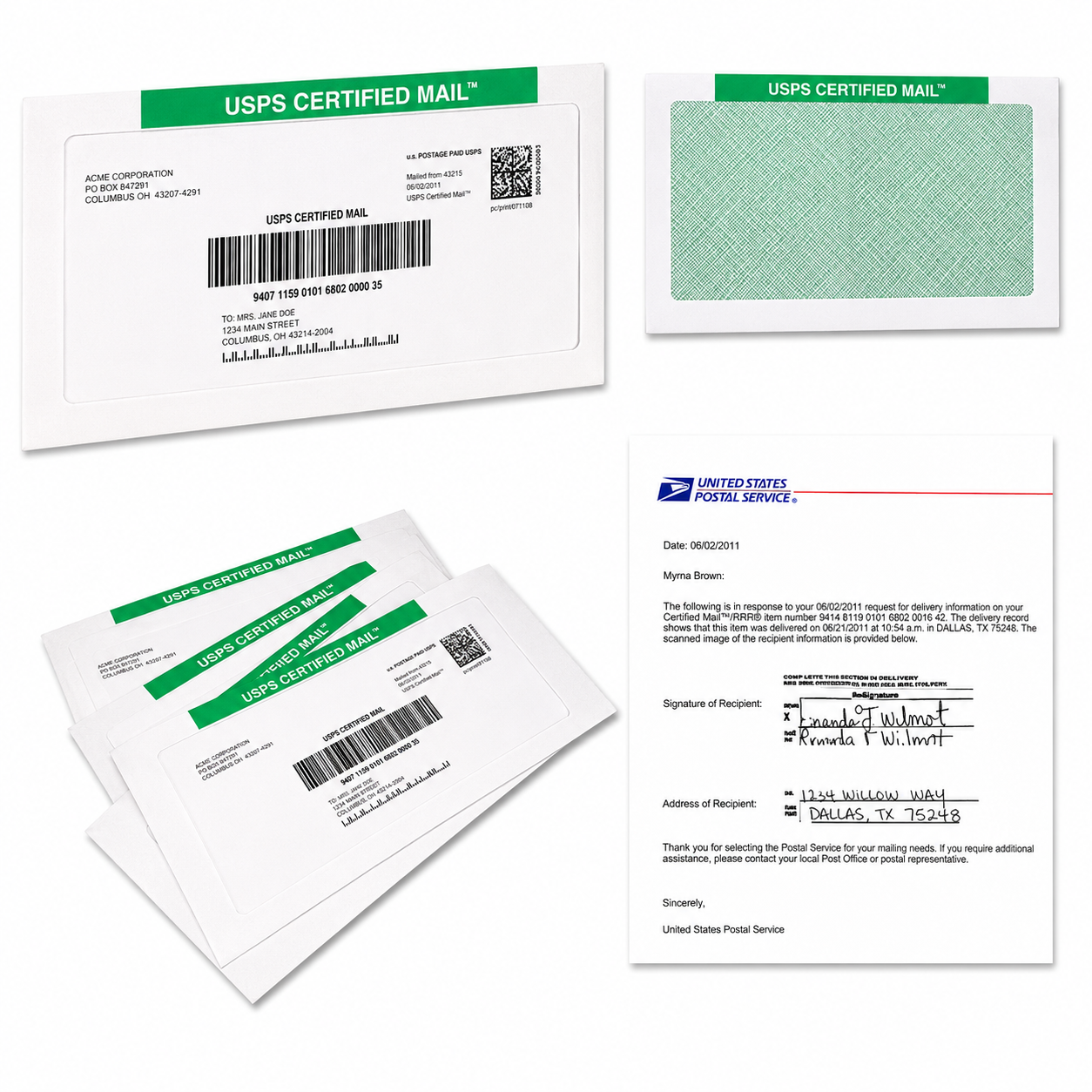
For mailings that need delivery confirmation or recipient signature records, consider whether electronic options meet your process requirements. Learn about Electronic Delivery Confirmation and electronic Return Receipt. These options can make confirmation easier to retrieve, but they do not replace checking the delivery method required for a particular notice.
Certified Mail Labels also provides a searchable Certified Mail reporting and archive feature for retrieving mailing and delivery records. Check the service page for current details and confirm that any recordkeeping approach aligns with your organization’s requirements.

How Can You Make The Calendar Easier To Manage?
Keep the calendar practical and easy to update. Use a shared tracker or workflow with clear owners and status labels, such as “needs approval,” “ready to mail,” “accepted,” and “follow-up required.” Review upcoming deadlines regularly, especially when a holiday or internal approval process may affect your preparation time.
You can make the process easier by combining planning with dependable mailing tools. You’ll be able to create Certified Mail labels online or have documents printed and mailed. You’ll have tracking and delivery information to review. You won’t need to build your process around a Post Office trip, a monthly subscription, or leased equipment. And with searchable digital records, your team can spend less time looking for mailing details.
We understand that these notices matter. A clear calendar, a verified delivery method, and a complete mailing record can help your team handle year-end correspondence with more confidence.
Frequently Asked Questions
What should businesses include in a year-end compliance mailing calendar?
Include each planned notice, its responsible owner, approval status, target mailing date, delivery requirements, recipient list status, and follow-up steps. Confirm deadlines and requirements with the applicable rule, agreement, order, or internal compliance guidance.
Does a holiday mailing schedule change a legal deadline?
No. USPS holiday and service information helps you plan mailing operations, but it does not determine or change a legal or contractual deadline. Verify the deadline under the applicable requirement.
Is Certified Mail required for every compliance notice?
No. Certified Mail is not automatically required for every compliance notice. Check the rule or other requirement that applies to the specific notice and use the delivery method it calls for.
What mailing records should we keep?
Keep the final notice, relevant approvals, the recipient list used, mailing and acceptance evidence, tracking details, delivery or return information, and notes about follow-up. Apply your organization’s retention schedule and any legal hold.
Can Certified Mail Labels help with year-end mailings?
Yes. Certified Mail Labels offers online Certified Mail label creation and a print-and-mail service for PDF letters and address lists. Review the service details and confirm that the selected mailing method meets your organization’s requirements.
Ready to make your next compliance mailing easier? Visit Certified Mail Labels to create labels online or arrange printing and mailing. Save time, simplify follow-up, and keep your mailing records easier to find.