
Definition, Uses, and Why Notarization Matters
Last Updated: October 2026
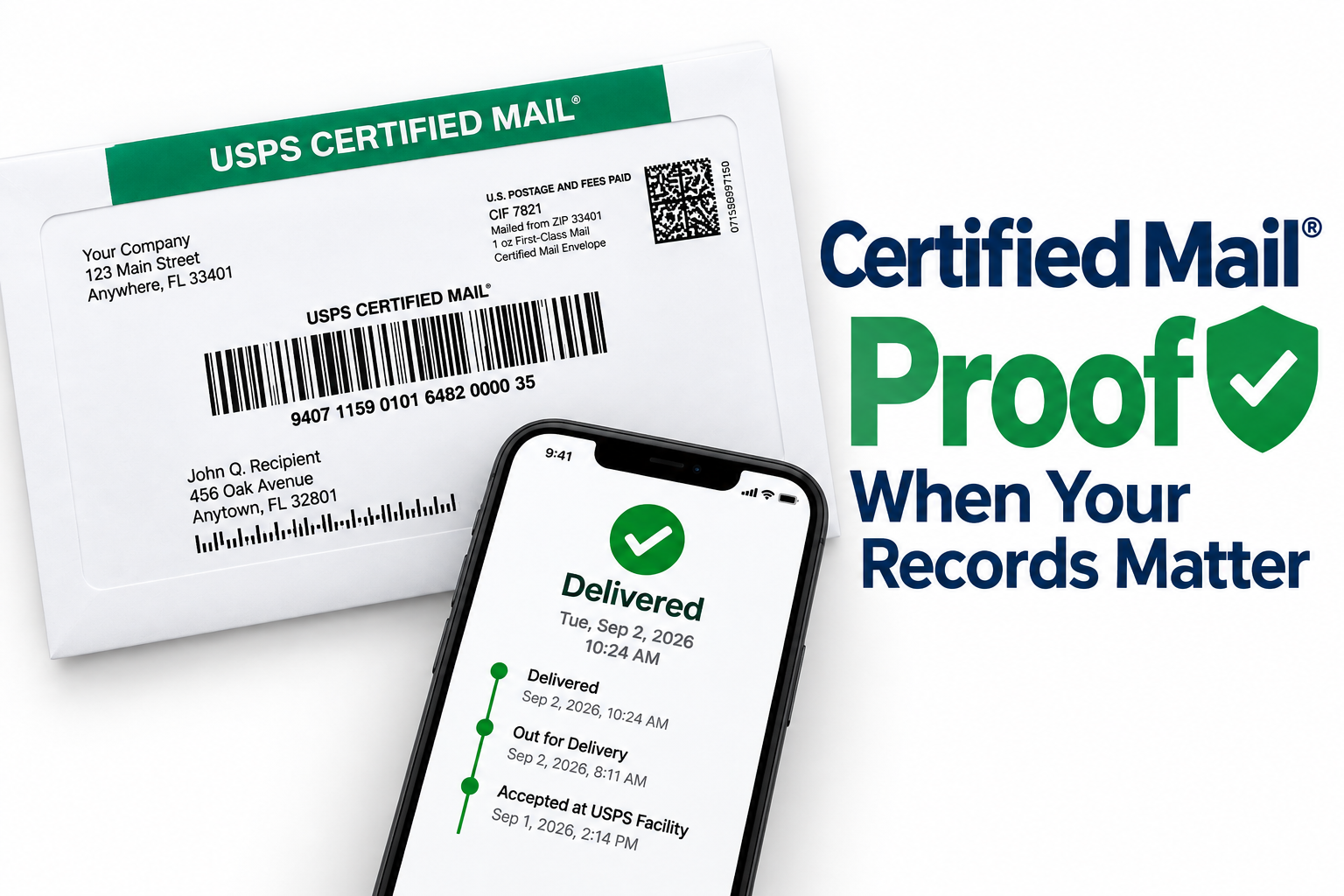
An Affidavit of Mailing is a sworn, notarized statement documenting that specific mail pieces (identified by recipient name, address, and USPS Certified Mail tracking number) were received by USPS and entered the mail stream on a stated postmark date.
It is used as a formal compliance record to support proof that required notices or correspondence were mailed. USPS provides its own mailing receipt and delivery records through Certified Mail; the notarized Affidavit of Mailing is a separate third-party record created by the mailing provider on top of those USPS records.
In Plain English
An Affidavit of Mailing answers four important questions: Who mailed the documents, what was mailed, who received it, and when did USPS accept it? The affidavit adds a sworn statement to the Certified Mail receipt, tracking history, and acceptance information.
USPS does not issue a notarized document called an “Affidavit of Mailing.” USPS’s official proof of mailing is the Certified Mail mailing receipt described in DMM 503, section 3.1.1. The affidavit is created by the sender or mailing provider as an additional legal compliance mailing record.
What It Includes
A complete affidavit generally identifies:
- The sender or affiant making the statement.
- The document, notice, or letter that was mailed.
- Each recipient’s name and mailing address.
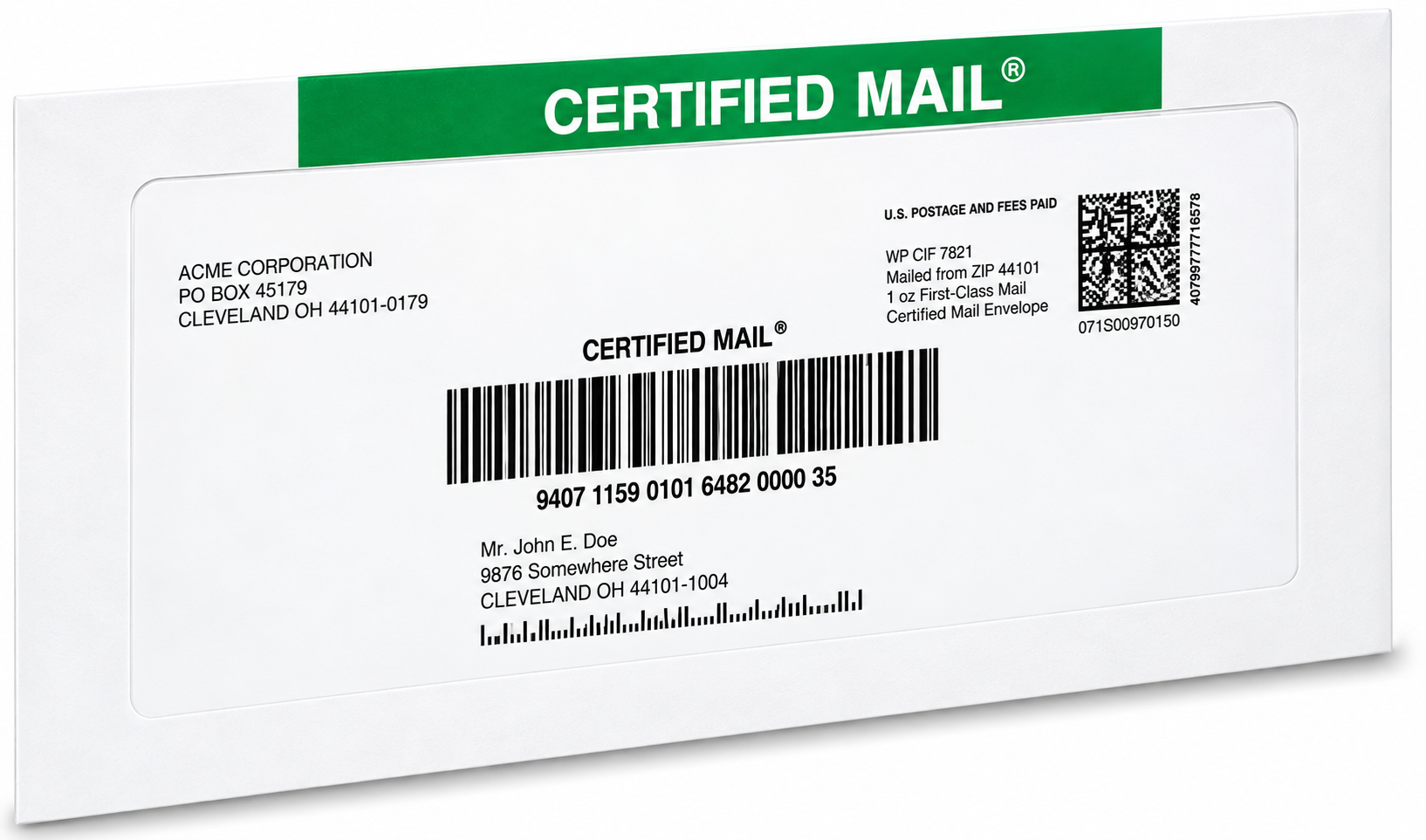
- The USPS Certified Mail tracking number for each mail piece.
- The postmark or USPS acceptance date.
- A statement that the listed pieces were delivered to USPS and entered the mail stream.
- The affiant’s signature.
- A notary acknowledgment or jurat confirming the statement was sworn before a notary public.
- Supporting USPS receipts, acceptance scans, tracking events, or delivery records.
When You Need It
An Affidavit of Mailing can support documentation for:
- Pre-termination notices and employment-related correspondence.
- COBRA and employee benefit plan notices.
- Demand letters and collection notices.
- Rent, lease, eviction, and property management notices.
- Regulatory correspondence sent by agencies or financial institutions.
- Court-related notices when the applicable rule requires proof of mailing.
- Audit files, dispute resolution, and internal compliance reviews.
- Any time you need a stronger record than an ordinary mailing receipt.
Certified Mail provides a mailing receipt and, upon request, electronic verification that an article was delivered or that a delivery attempt was made. USPS also maintains a record of delivery, which can include the recipient’s signature. The affidavit connects those postal records to the specific documents and recipients involved.
How It Works with Certified Mail Labels
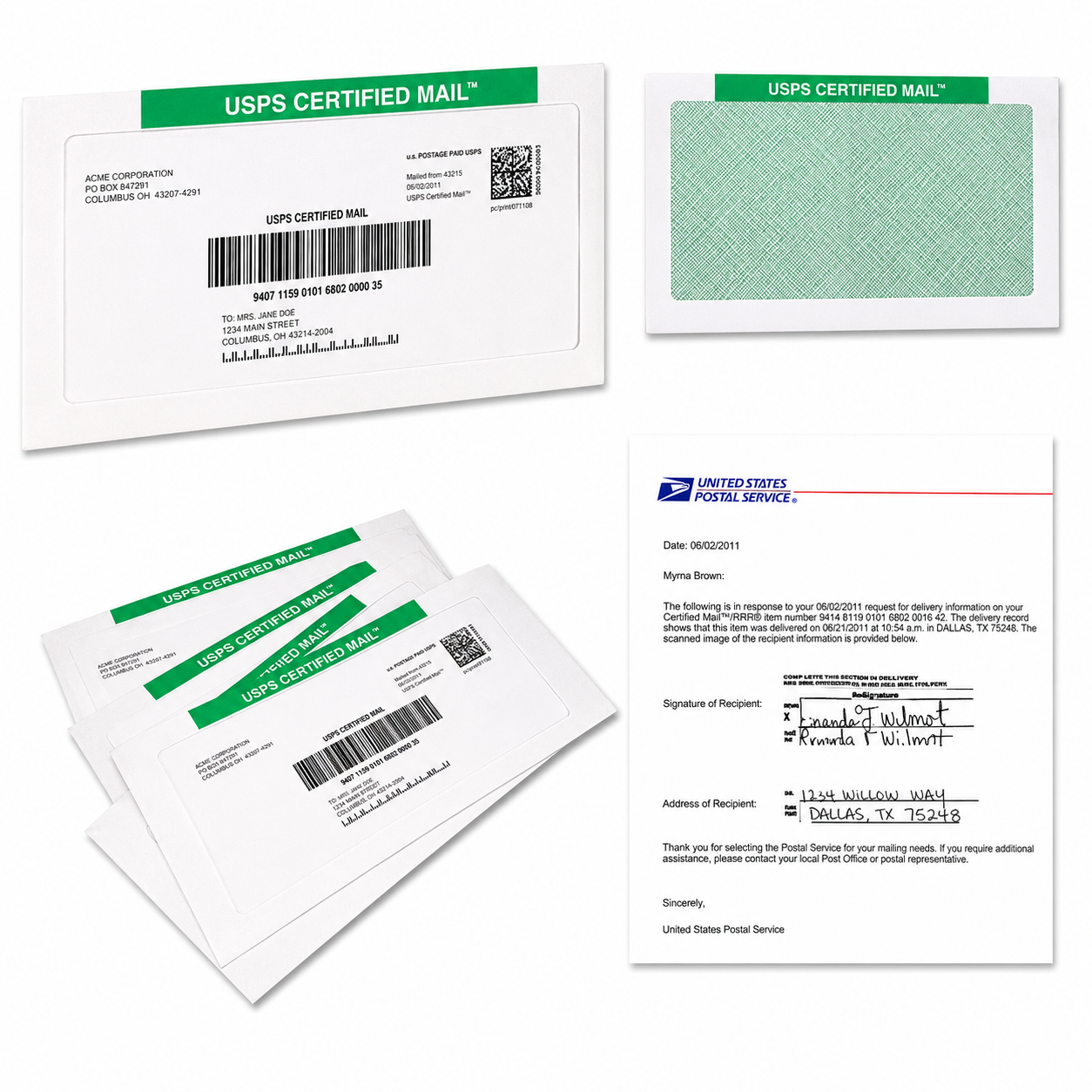 With Certified Mail Labels Print & Mail, you upload your PDF letter and address list. Certified Mail Labels prints the documents, inserts them into envelopes, applies postage and USPS Certified Mail labels, and hands the mailing to USPS the same business day for orders submitted before 5:00 PM Eastern.
A notarized Affidavit of Mailing is generated automatically for every mailing. It is stored with USPS acceptance scans, Certified Mail tracking, delivery events, and related records in the free 10-year compliance archive, so you do not need a trip to the Post Office or a separate trip to a notary.
Notarization matters because it confirms that the signer appeared before a notary public and swore that the information was true. Under 28 U.S.C. § 1746, an unsworn declaration subscribed as true under penalty of perjury and dated may have the same force and effect as a sworn affidavit when federal law permits it, except where an oath must be taken before a specified official other than a notary public. Section 1746(2) provides the form for declarations executed within the United States: "I declare (or certify, verify, or state) under penalty of perjury that the foregoing is true and correct. Executed on (date)." The declaration must be signed and dated. Section 1746(1) is the variant for declarations executed outside the United States and inserts the words "under the laws of the United States of America." A signed and notarized record can be harder to challenge later if a mailing date, recipient, or certified mail tracking history is questioned.

Frequently Asked Questions
Is an Affidavit of Mailing the Same as a USPS Certificate of Mailing?
No. A USPS Certificate of Mailing or Certified Mail receipt is issued by USPS. An Affidavit of Mailing is a sworn record created by the sender or mailing provider and may identify the documents, recipients, tracking numbers, and compliance purpose.
Does an Affidavit of Mailing Prove Delivery?
Not by itself. It primarily documents that the listed mail pieces were mailed and accepted by USPS. Delivery or attempted delivery is supported by USPS Certified Mail tracking, delivery confirmation, or signature records.
Why Does the Affidavit Need to Be Notarized?
Notarization confirms that the signer made the statement under oath before a notary public. This adds credibility and may provide stronger support during audits, disputes, or litigation.
How Much Does USPS Certified Mail Cost?
USPS Notice 123, effective July 12, 2026, lists the Certified Mail fee at $5.55 per item, in addition to postage and other fees.
How Do I Send Certified Mail and Keep Proof?
You can create and print USPS Certified Mail labels online, or upload your PDF letter and address list for full-service processing. Keep the USPS receipt, tracking history, delivery records, and Affidavit of Mailing together.
Is an Affidavit of Mailing Legal Advice?
No. This page provides general information and does not provide legal advice. Questions about what your records must contain should go to your attorney or compliance officer.
Sources
- USPS Domestic Mail Manual (DMM) 503, section 3.1.1 (current edition), USPS Postal Explorer (pe.usps.com): "Certified Mail provides the sender with a mailing receipt and, upon request, electronic verification that an article was delivered or that a delivery attempt was made... USPS maintains a record of delivery (which includes the recipient's signature)."
- 28 U.S.C. § 1746, "Unsworn declarations under penalty of perjury" (28 U.S.C., U.S. House of Representatives Office of the Law Revision Counsel, text in effect September 2026): a written declaration "subscribed... as true under penalty of perjury, and dated" may be used "with like force and effect" as a sworn affidavit, except where an oath is "required to be taken before a specified official other than a notary public." Section 1746(2) states the form for declarations executed within the United States: "I declare (or certify, verify, or state) under penalty of perjury that the foregoing is true and correct. Executed on (date)." Section 1746(1) provides the form for declarations executed outside the United States and includes the words "under the laws of the United States of America." (Added Pub. L. 94-550, Oct. 18, 1976, 90 Stat. 2534.)
- USPS Notice 123, Price List, effective July 12, 2026 (Domestic — Extra Services and Fees), Postal Explorer, p. 28: Certified Mail fee $5.55 per item, in addition to postage and other fees.