
Retention Schedules by Industry

There is no universal certified-mail retention period. Six years is a common federal benchmark for certain records, but litigation holds, state requirements, industry rules, and the underlying matter can require longer retention. A 10-year archive is a practical, conservative policy for many businesses, but this article is for general information and is not legal advice.
Your certified mail record may be the evidence that a notice was sent, accepted by USPS, delivered, refused, or signed for. If that proof matters for a dispute, audit, compliance review, benefits decision, tax issue, or collection file, you should retain it with the underlying business record.
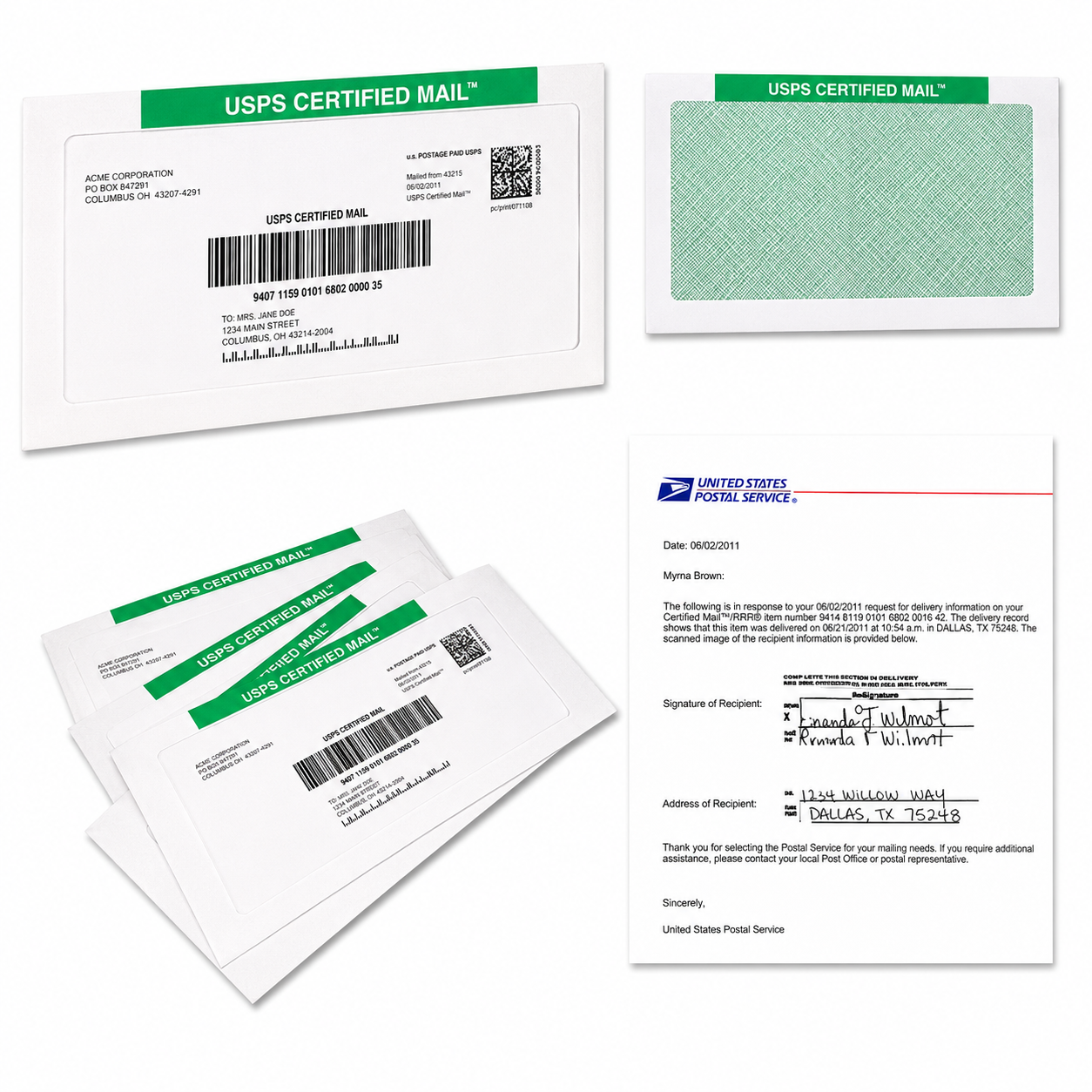
What Should You Keep With Each Certified Mailing?
A label alone may not tell the complete story. For a useful, defensible record, keep the mailing information together in one searchable file.
Here are just a few records you’ll want to retain:
- A copy of the letter, notice, or document mailed
- Recipient name and address
- Date the mailing was prepared and submitted
- Certified Mail tracking number
- USPS acceptance or SCAN form information
- Delivery status and delivery date
- Electronic delivery confirmation or signature record
- Return-to-sender information, if applicable
- Internal matter number, account number, or case reference
- Notes about returned mail, re-mailing, or follow-up
- Any related email, call note, or legal correspondence
Why Is There No Single Retention Rule?
Certified mail is a delivery method, not one specific type of business record. The correct retention period usually follows the underlying document or matter.
For example:
- A benefits notice may belong in an ERISA plan record.
- A breach notification may belong in a healthcare compliance file.
- A tax filing notice may belong in a tax workpaper file.
- A foreclosure or lease notice may belong in a property or litigation file.
- A debt collection letter may belong in a consumer account record.
The certified mail proof supports that record. It may need to be kept as long as the underlying file must be retained, even if a shorter period might apply to the mailing record by itself.
You also need to consider a legal hold. If litigation, an investigation, an audit, a government request, or a reasonably anticipated dispute exists, suspend normal destruction. A litigation hold overrides your routine retention schedule until counsel releases the hold.
What Are the Main Federal Retention Benchmarks?
ERISA and Employee Benefit Records
For ERISA-related mailings, Section 107 of ERISA, 29 U.S.C. § 1027, generally requires records supporting required reports to be kept for at least six years after the filing date of the report, or after the date it would have been filed.
The Department of Labor’s Field Assistance Bulletin 2010-01 discusses ERISA recordkeeping, including records supporting Form 5500 reporting and records needed to determine benefits.
For mailings connected to benefit entitlements, six years may not be enough. Records needed to determine benefits that are or may become due may need to be retained as long as they remain relevant under 29 U.S.C. § 1059.
Electronic storage is permitted when it meets applicable requirements. 29 CFR § 2520.107-1 is the electronic-recordkeeping standard. It addresses integrity, accuracy, authenticity, reliability, accessibility, indexing, retrieval, legibility, reproduction, convertibility to paper, and disposal of originals. It does not create the six-year retention period. The six-year period is attributed to 29 U.S.C. § 1027, while records used to determine benefits should also be evaluated under 29 U.S.C. § 1059.
HIPAA and Healthcare Compliance Documentation
HIPAA requires certain compliance documentation to be retained for at least six years from creation or from the date it was last in effect, whichever is later. See 45 CFR § 164.316(b)(2)(i), 45 CFR § 164.530(j)(2), and the HHS HIPAA Security Rule page.
The six-year rule applies to required Security Rule and Privacy Rule compliance documentation. It does not require retaining the protected health information itself for six years, and it is not a blanket six-year rule for every certified mailing.
If you send a certified notice as part of a HIPAA-related process, keep the proof of mailing and delivery with the applicable compliance documentation. State medical-record rules, malpractice exposure, contracts, and other healthcare requirements may require a longer period.
IRS and Tax-Related Mailings
The IRS explains that record retention depends on the action, expense, or event documented. Its official recordkeeping guidance describes several important periods:
- Three years for many records when other exceptions do not apply
- Six years when more than 25% of gross income was omitted
- Seven years for a claim involving a loss from worthless securities or a bad debt deduction
- The later of three years from filing or two years from payment for certain refund claims
- Indefinite retention for fraudulent returns or returns that were not filed
These periods relate to federal tax limitation periods, including IRC § 6501, IRC § 6501(e), IRC § 6511, and IRC § 6511(d)(1).
Taxpayers are well advised to keep records at least this long. These provisions are assessment and refund limitation rules, not standalone record-retention mandates.
They are not blanket rules for certified mail records. If Certified Mail proves when a return, response, protest, or refund claim was sent, the mailing evidence should be retained with the tax file and any longer applicable policy.
What Retention Period Makes Sense By Industry?
The following table provides practical starting points, not legal requirements for every organization.
| Industry or Matter | Common Retention Driver | Practical Certified Mail Policy |
|---|---|---|
| Employee benefits and ERISA reporting | 29 U.S.C. § 1027, 29 U.S.C. § 1059, and 29 CFR § 2520.107-1 electronic-recordkeeping standards | At least 6 years for report-supporting records; retain benefit-related records as long as relevant, potentially indefinitely |
| Healthcare and HIPAA compliance | 45 CFR § 164.316(b)(2)(i), 45 CFR § 164.530(j)(2), state law, malpractice risk | At least 6 years for applicable compliance documentation; use a longer period when state or professional rules require it |
| Tax, accounting, and finance | IRS limitation periods, IRC §§ 6501, 6501(e), 6511, and 6511(d)(1), audits, contracts | Commonly 7 years for tax-related mailings; extend for complex positions, property, disputes, or holds |
| Law firms and legal departments | Matter file policy, statutes of limitation, discovery obligations, legal holds | Match the matter file; use 10 years as a conservative baseline when no shorter or longer counsel-approved period applies |
| Property management and real estate | Lease, notice, eviction, lien, foreclosure, and state-law requirements | Commonly 7–10 years or longer; retain through the full dispute, lease, or property-related period |
| Collection agencies and creditors | Account records, consumer laws, disputes, litigation, client contracts | Commonly 7–10 years; preserve longer when a dispute, complaint, lawsuit, or regulatory inquiry exists |
| Government and municipalities | Agency schedules, public-record rules, grants, audits, and litigation | Follow the approved government records schedule; do not rely on a general six- or 10-year policy without review |
| General business and HR | Employment rules, contracts, insurance, claims, and internal policy | Use the underlying record schedule; 7–10 years is a practical conservative range for significant notices |
How Do You Set the Retention Clock?
The retention clock should be clear and consistent. Do not simply count from the date someone printed a label unless your policy says to do so.
Depending on the record, the clock may begin on:
- The mailing date
- The delivery date
- The date the related report was filed
- The end of the tax year
- The end of a lease, contract, or account
- The date a claim or matter closes
- The date a policy was replaced
- The date a benefit could no longer become due
Your written policy should identify the record owner, retention period, trigger date, storage location, access controls, and disposal process. It should also state that legal holds and government requests suspend ordinary destruction.
Worked Example: Choosing a Retention Period
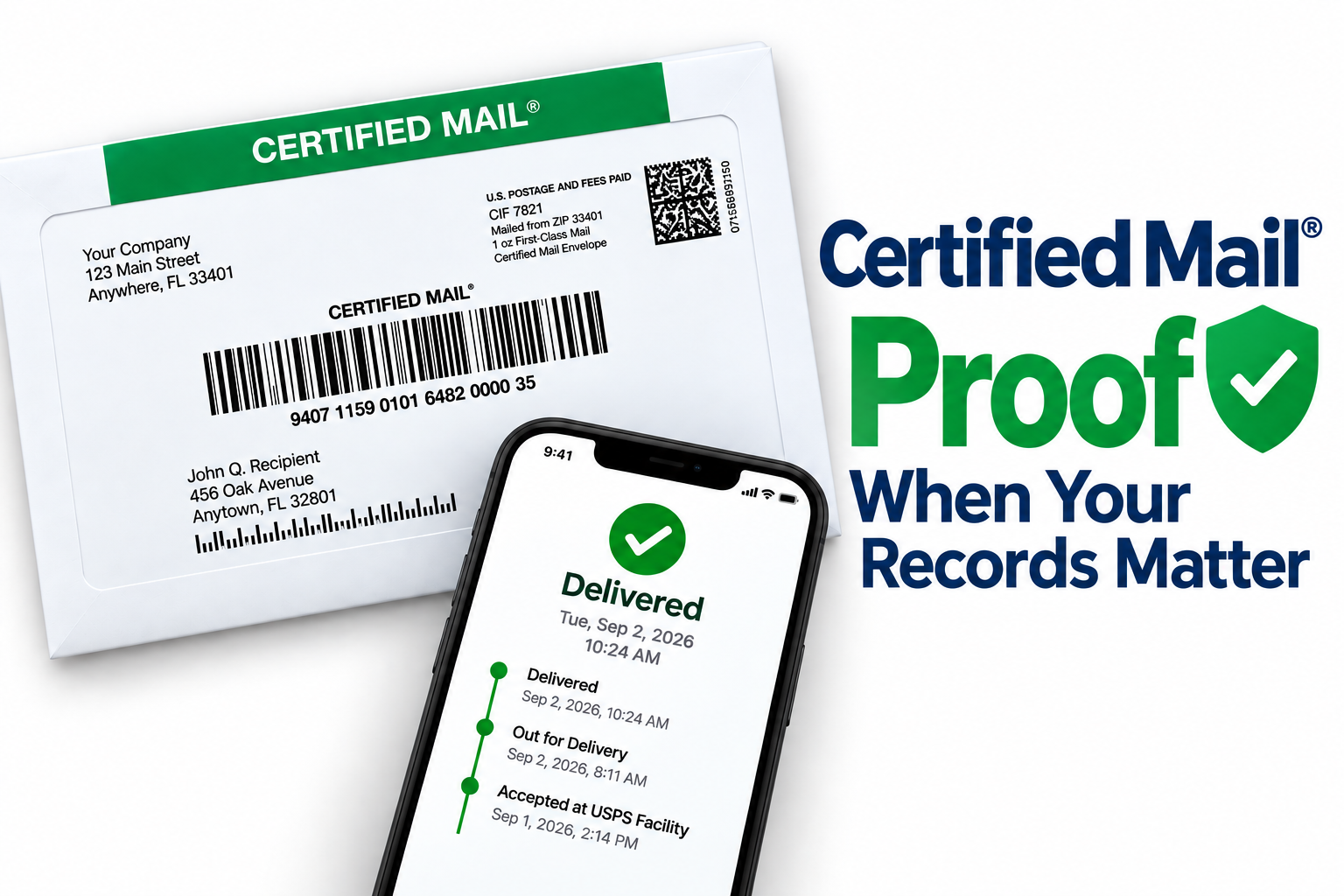
Assume a property management company sends a certified lease-default notice on October 1, 2026. USPS shows acceptance that day and delivery on October 5, 2026. The tenant later disputes whether proper notice was provided.
The company’s written policy says:
- Keep lease and notice records for seven years after the matter closes.
- Keep certified mail proof with the notice.
- Preserve records longer when a dispute or litigation hold exists.
If the lease matter closes on March 31, 2027, the ordinary destruction date would be March 31, 2034: seven years after closure. If the tenant files a lawsuit in 2032, the company must suspend destruction and preserve the letter, address record, tracking history, delivery confirmation, and related communications until counsel releases the hold.
A 10-year archive would allow the company to retrieve the record through 2036, providing an additional conservative buffer without requiring staff to search paper files or old email accounts.
How Can a 10-Year Archive Improve Compliance?
A 10-year archive gives you one central location for certified mail labels, mailing dates, USPS acceptance information, tracking events, delivery confirmations, signatures, and supporting documents.
With Certified Mail Labels, you can:
- Create and print live-postage USPS Certified Mail labels online
- Upload PDF letters and address lists for same-business-day mailing
- Receive USPS proof of acceptance, tracking, and delivery information
- Use electronic delivery confirmation and electronic return receipt
- Search and retrieve mailing records without sorting paper receipts
- Support audits, disputes, compliance reviews, and internal investigations
- Manage high-volume mailings through Excel, CSV, API, or SFTP workflows
- Maintain a searchable 10-year compliance archive at no extra charge
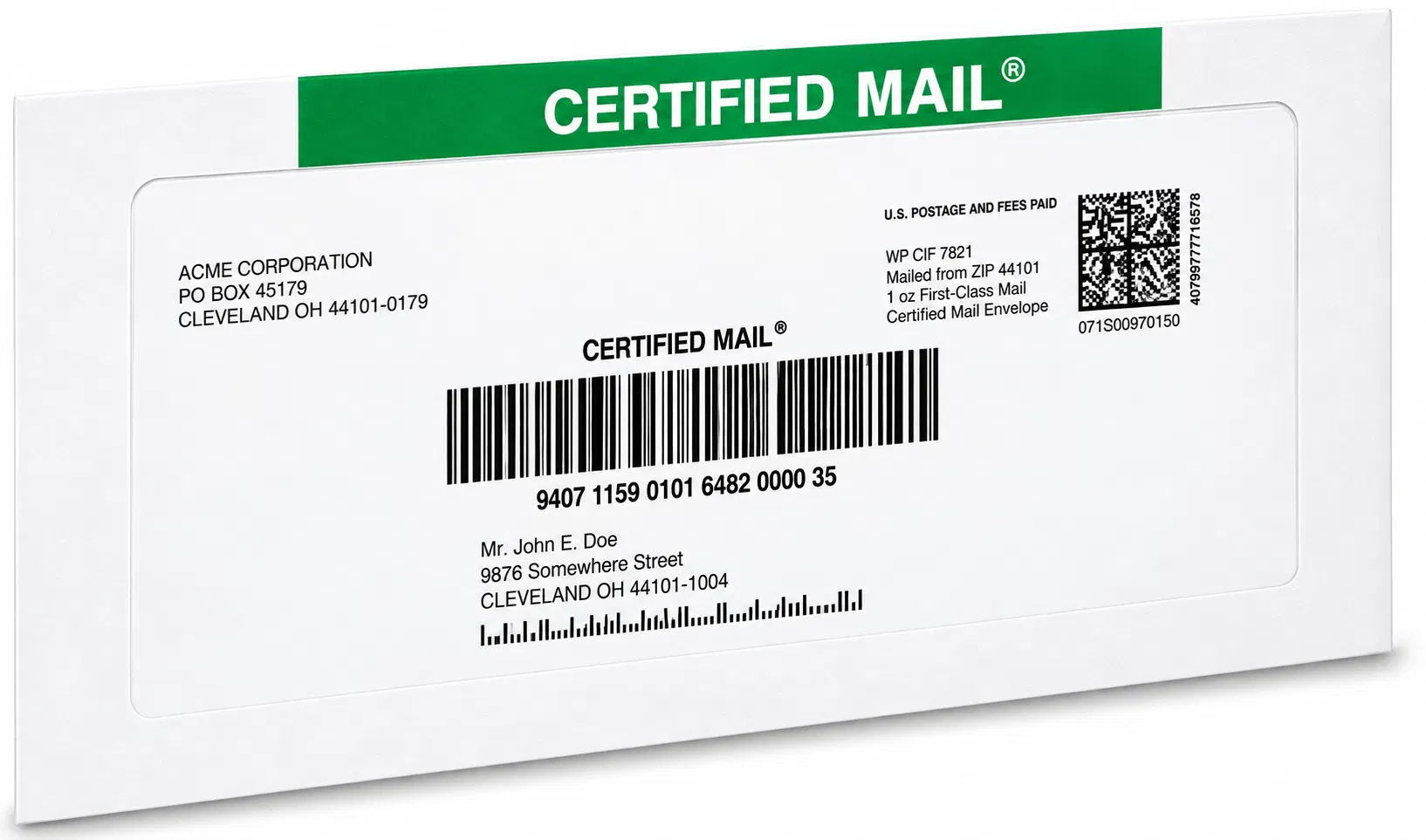
A digital archive does not replace your retention policy or legal review. It helps you apply that policy consistently and retrieve the evidence when you need it.
What Should You Do Next?
Start by identifying the types of certified mail your organization sends. Group them by tax, benefits, healthcare, legal, property, collections, HR, government, or general business use.
Then:
- Assign each category a retention period
- Confirm the trigger date
- Add a legal-hold procedure
- Keep the document and delivery proof together
- Review state, contractual, and profession-specific requirements
- Ask qualified counsel to review high-risk or unclear categories
For a practical starting point, many organizations choose a 10-year retention policy for important certified mail records, while using longer or indefinite retention where a law, matter, or legal hold requires it.
Start building a searchable record today with Certified Mail Reports, review your Certified Mail Tracking options, and keep your proof of mailing organized without monthly fees, contracts, or equipment leases.
Frequently Asked Questions
Is six years the required retention period for all certified mail?
No. Six years is a common federal benchmark for some records, including certain ERISA records under 29 U.S.C. § 1027 and certain HIPAA compliance documentation under 45 CFR § 164.316(b)(2)(i) and 45 CFR § 164.530(j)(2). Certified Mail retention depends on the underlying document, industry, state law, contract, litigation risk, and internal policy.
Is a 10-year archive legally required?
Not generally. A 10-year archive is a practical conservative policy that may help organizations manage audits, disputes, and long-lived compliance needs. It does not replace a law-specific retention schedule or legal advice.
How long should I keep certified mail for tax purposes?
The IRS describes different periods, including three years in many situations, six years for substantial income omissions, seven years for bad debt or worthless securities claims, and the later of three years from filing or two years from payment for certain refund claims. These periods reflect tax assessment and refund limitation rules under IRC §§ 6501, 6501(e), 6511, and 6511(d)(1), so taxpayers are well advised to keep records at least that long. These are not blanket Certified Mail rules. Keep the proof with the applicable tax file and follow the longest relevant requirement.
Do legal holds extend certified mail retention?
Yes. If litigation, an investigation, an audit, a complaint, or a government request is pending or reasonably anticipated, preserve relevant certified mail records beyond the normal destruction date until the hold is released.
Can certified mail records be stored electronically?
Often, yes, when the electronic system preserves integrity, accuracy, authenticity, accessibility, legibility, retrieval, and reproduction. For ERISA records, review 29 CFR § 2520.107-1, which addresses electronic recordkeeping standards rather than creating the six-year retention period. Consult counsel for your specific records and industry.
What should I do if my state or profession has a longer rule?
Use the longer applicable period and have the policy reviewed by qualified counsel. State requirements, licensing rules, professional standards, contracts, and litigation retention needs can exceed federal benchmarks.