
How a Bad Address Costs You a Case
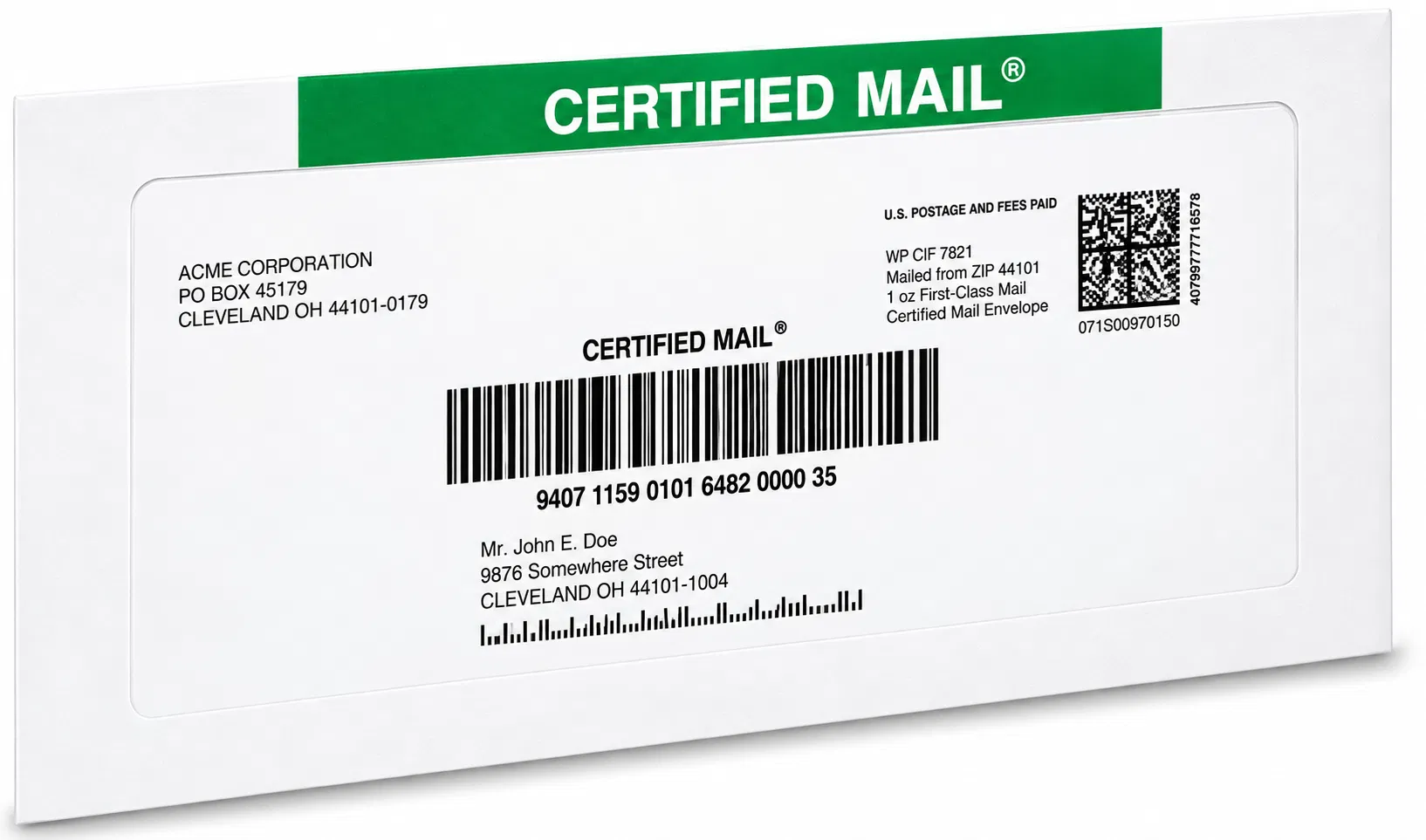
A correct recipient identity, complete delivery address, apartment or suite information, city, state, ZIP Code, and documented verification can reduce delivery problems and notice-related risk. However, USPS formatting compliance alone does not determine whether a legal notice is legally sufficient. Service requirements depend on the applicable statute, court rule, contract, and jurisdiction. Always have counsel review your notice and mailing process.
A bad address may cause a notice to be returned, delayed, delivered to the wrong location, or supported by incomplete evidence. It does not automatically defeat a case. But it can create an avoidable dispute about whether you used reasonable efforts, mailed to the correct person, or followed the required notice procedure.
Why Does Address Accuracy Matter For Legal Notices?
Legal notices are often time-sensitive. A notice may start a response period, support a collection action, document a lease default, protect a foreclosure timeline, or satisfy an internal compliance requirement.
When the address data is incomplete or outdated, you may face:
- Returned or undeliverable mail.
- Delivery attempts at the wrong location.
- Missing apartment, suite, or unit information.
- Confusion between a street address and a Post Office Box.
- Difficulty proving which address was used on the mailing date.
- Questions about whether the intended recipient was properly identified.
- Additional mailing costs, delays, and administrative work.
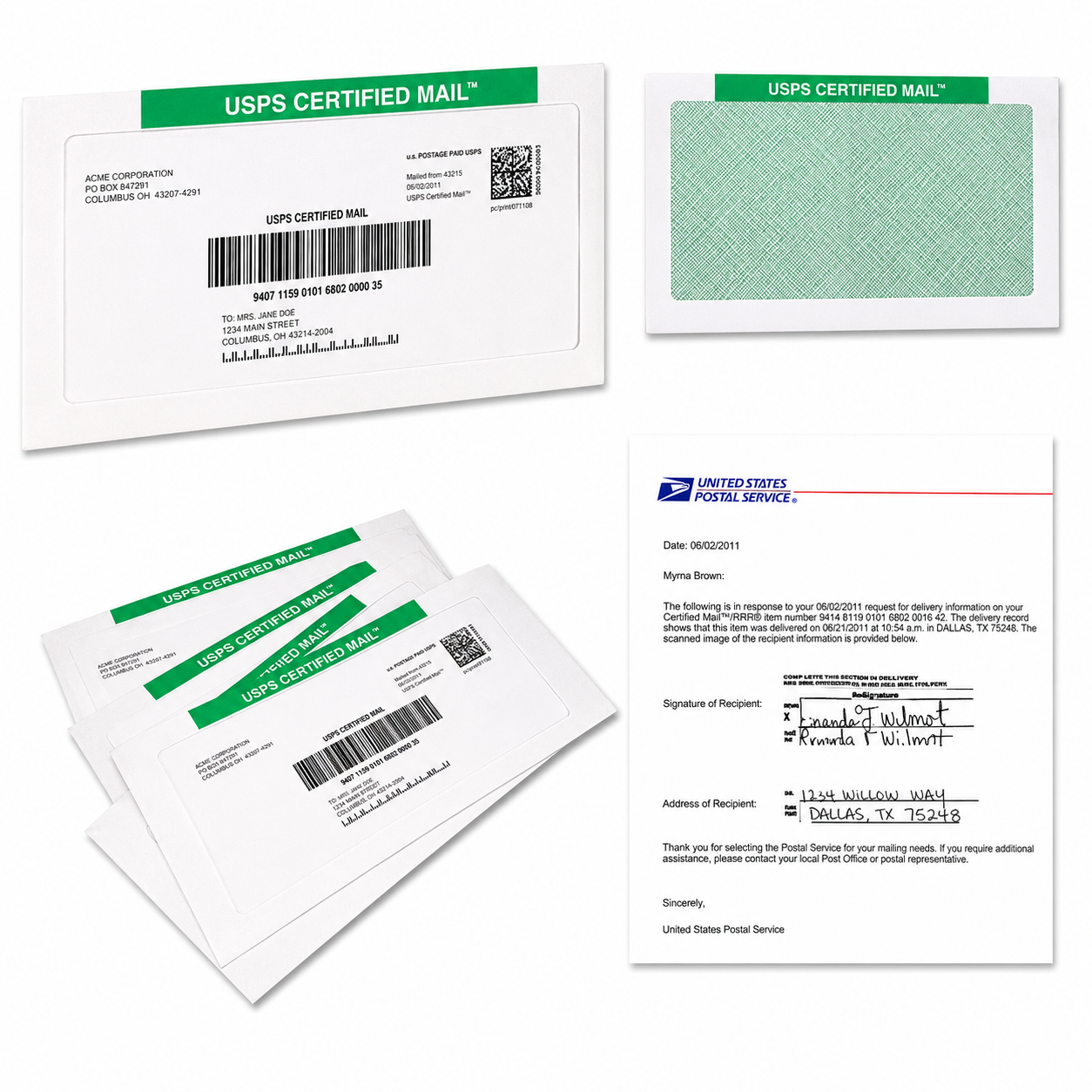
USPS Certified Mail gives you a mailing receipt and delivery or attempted-delivery information. Under DMM 503, Certified Mail may be combined with First-Class Mail or Priority Mail, and Return Receipt may be added when you need delivery information and signature records. USPS records what happened to a mailpiece addressed to a particular location. It does not decide whether that location satisfies your legal service obligations.
What USPS Standards Should You Follow?
 The primary USPS sources for addressing and Certified Mail preparation are:
- USPS Publication 28, Postal Addressing Standards: Detailed guidance for address elements, abbreviations, secondary units, ZIP Codes, and standardized formatting.
- DMM 602, Addressing: Requirements for delivery addresses, complete addresses, clear space, ZIP Codes, dual addresses, and address quality.
- DMM 202, Elements on the Face of a Mailpiece: Rules for visible and legible addresses, placement, type size, postage, markings, and clear space.
- DMM 503, Extra Services: Certified Mail, Return Receipt, label requirements, and placement of extra-service labels.
Under DMM 602, a complete address generally includes the addressee or other identifier, firm name when applicable, street number and name or another valid delivery designation, secondary unit information, city and state, and the correct 5-digit ZIP Code or ZIP+4 Code.
DMM 202 also requires the delivery address to be visible and legible on the side of the mailpiece bearing postage. The address should not be crowded by postage, Certified Mail markings, endorsements, or other labels.
For Certified Mail, DMM 503 states that the green Certified Mail label should be placed above the delivery address and to the right of the return address, or to the left of the delivery address on parcels. Follow the current USPS requirements for the specific label and mailpiece you are preparing.
What Does A Bad Legal-Notice Address Look Like?
Small data problems can create major uncertainty. Compare these examples:
| Address Data | Problem | Corrected Address Data |
|---|---|---|
John Doe, 123 Main, Dallas TX |
Missing street suffix and ZIP Code | JOHN DOE123 MAIN STDALLAS TX 75201 |
ABC Properties, 450 Oak St, Unit 5, Atlanta, GA |
Missing ZIP Code and inconsistent unit formatting | ABC PROPERTIES450 OAK ST STE 5ATLANTA GA 30303 |
Jane Smith, 100 Market St / PO Box 88, Denver CO 80202 |
Dual address may create uncertainty about the intended delivery point | Use the address your records and counsel identify as the required delivery location, formatted consistently |
Robert Lee, 77 River Road, Apt. 4B, Chicago IL 60601 |
Generally understandable, but not in a consistent USPS-style format | ROBERT LEE77 RIVER RD APT 4BCHICAGO IL 60601 |
Current Resident, 25 Pine St, Miami FL |
May not identify the person required by a statute or court rule | Use the legally required recipient name, then confirm the complete delivery address |
The corrected versions are formatting examples, not legal conclusions. A standardized address is not necessarily the legally required address. For example, the correct address for a defendant, tenant, debtor, patient, employee, or business may depend on the governing law and the facts of the matter.
Address QA Checklist For Legal Notices
Before creating a Certified Mail label, review each record against this checklist:
| QA Check | What To Confirm | Documented? |
|---|---|---|
| Recipient identity | Correct legal name, business name, or other required identifier | Yes / No |
| Source address | Where the address came from, such as contract, court filing, account record, or client instruction | Yes / No |
| Street or PO Box | Correct delivery designation and number | Yes / No |
| Unit information | Apartment, suite, floor, room, lot, or PMB when applicable | Yes / No |
| City and state | Correct mailing city and two-letter state abbreviation | Yes / No |
| ZIP Code | Correct 5-digit ZIP Code or ZIP+4 when available | Yes / No |
| USPS standardization | Address reviewed against USPS-compatible standards or an approved quality process | Yes / No |
| Verification date | Date the address was checked | Yes / No |
| Notice match | Address on the notice, envelope, label, and mailing record matches | Yes / No |
| Mailing evidence | Label, receipt, acceptance scan, tracking, and delivery records retained | Yes / No |
Here are just a few practical checks that can prevent rework:
- You’ll confirm the recipient before you confirm the postage.
- You’ll check every unit, suite, apartment, and PMB field.
- You won’t rely on a city and ZIP Code combination alone.
- You won’t assume an old address remains current because mail was delivered there before.
- You’ll review the final label, not only the spreadsheet.
- You’ll keep the original data and the standardized output together.
How Should You Document Address Verification?
Good documentation shows what you knew, when you knew it, and what process you used. It does not guarantee a legal result, but it creates a clearer record.
Use a repeatable process:
- Identify the source. Record whether the address came from a signed agreement, account file, public record, court document, returned mail, customer communication, or client-provided list.
- Preserve the original value. Keep the address exactly as received before any correction or standardization.
- Record the standardized value. Save the formatted address used for the notice and Certified Mail label.
- Record the verification method. Note whether the address was checked using a USPS-compatible tool, CASS-certified process, internal review, client confirmation, or another approved workflow.
- Record the verification date. Address data can change. Include the date and, when available, the database or service version used.
- Record exceptions. If the system cannot confirm a unit, ZIP+4, or delivery point, flag the record for human review.
- Match the mailing evidence. Retain the final notice, label, tracking number, USPS acceptance information, delivery or attempted-delivery record, and any Return Receipt.
For bulk mailings, your address file should also include an internal reference number that connects the recipient record to the notice, label, document, and tracking record.

How Can You Reduce Address And Mailing Risk?
A reliable legal-notice workflow separates address review from document preparation and mailing.
- Start with the legally required recipient and address standard.
- Review address data before generating labels.
- Use a consistent USPS-style format based on Publication 28 and DMM 602.
- Confirm that the address is visible and legible under DMM 202.
- Apply Certified Mail labels according to DMM 503.
- Select Electronic Return Receipt when your process requires available signature information.
- Retain the mailing and delivery evidence with the case file.
- Have counsel review jurisdiction-specific notice and service requirements.
Certified Mail Labels can support this process by letting you create and print Certified Mail labels online, upload address lists, and manage tracking and delivery records digitally. If you want to avoid printing and inserting letters yourself, the Print & Mail service lets you upload PDF letters and recipient data for same-business-day processing when submitted before the applicable cutoff.
For recurring notices, you can also suggest these internal resources to your team:
- Excel Batch Label Processing for spreadsheet-based mailings.
- API and SFTP Automation for system-generated or recurring volume.
- Electronic Return Receipt FAQ for signature-related delivery records.
- Certified Mail Reports for tracking and documentation workflows.

Frequently Asked Questions
Can A Bad Address Automatically Defeat A Legal Case?
No. A bad address does not automatically defeat a case. Its effect depends on the governing law, required notice method, the facts, whether delivery was attempted, and what other evidence exists. An incorrect address can still create a serious dispute, so ask counsel to evaluate the specific situation.
Does USPS-Standardized Formatting Make A Notice Legally Sufficient?
No. USPS standards improve readability, processing, and delivery potential. They do not determine whether you selected the correct recipient, used the legally required address, provided the required notice, or satisfied a court rule.
Should I Include An Apartment Or Suite Number?
Yes, when applicable. A missing unit, suite, floor, room, or PMB can prevent delivery to the intended person or business. Confirm the unit from a reliable source and document the verification.
What Does Certified Mail Prove?
Certified Mail generally provides a mailing receipt and electronic verification of delivery or attempted delivery. A Return Receipt can provide additional delivery information and available signature records. The evidence relates to the particular mailpiece and address used; it does not independently prove every legal element of service.
How Long Should I Keep Address And Mailing Records?
Keep them for the period required by your legal, regulatory, contractual, and internal policies. A searchable archive can help preserve the notice, address data, tracking events, acceptance records, and delivery documents together. Ask counsel or your compliance team to confirm the appropriate retention period.
Correct address data is one of the simplest ways to reduce legal-notice risk. Verify the identity, confirm the complete delivery address, document the source and date, prepare the mailpiece under current USPS standards, and retain the evidence. Then ask counsel to confirm that your complete notice and service process meets the requirements for your matter.