
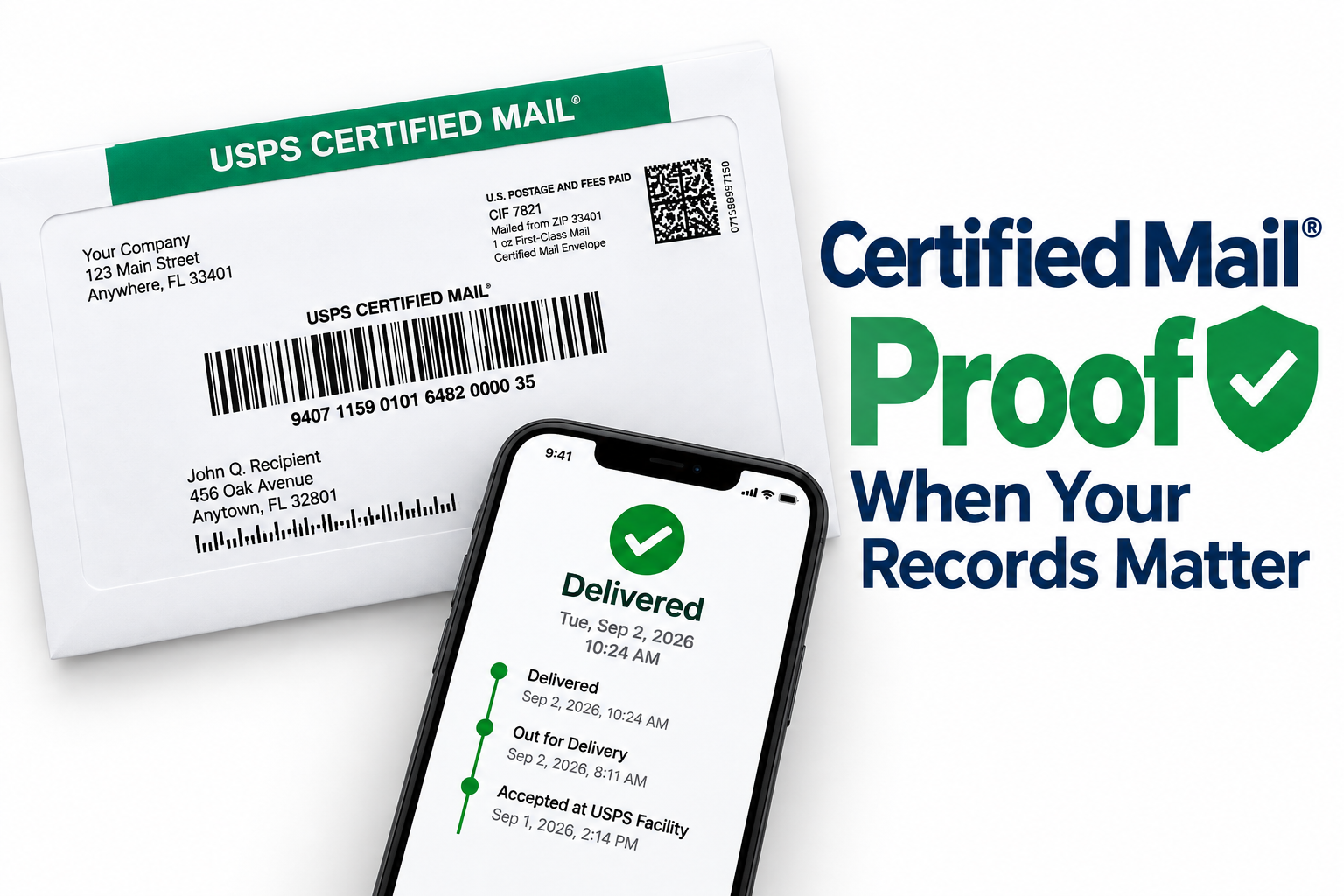
The mailbox rule means a qualifying tax return, claim, payment, or other document can be treated as filed on the date it was properly mailed, not the date the IRS receives it, when the statutory and regulatory requirements are satisfied. In practice, timely mailing is only as strong as your proof of the mailing date, USPS acceptance, postmark, address, and delivery record.
What Does the Mailbox Rule Mean Under 26 U.S.C. § 7502?
Under 26 U.S.C. § 7502(a), if a tax document or payment is delivered by United States mail after the deadline, the date of the United States postmark is generally treated as the delivery or payment date. Provided the postmark is timely and the document was properly mailed.
That is the familiar “timely mailed, timely filed” rule.
The practical formula is simple:
- You mail the document on or before the prescribed date.
- The envelope receives a qualifying postmark dated on or before that date.
- The document is properly addressed, has sufficient postage, and is eventually delivered.
- You retain evidence that allows you to prove each important step.
The implementing regulation, 26 CFR § 301.7502-1, explains the mailing, postmark, certified-mail, registered-mail, delivery, and electronic-postmark rules.
Why Is Proof More Important Than Ever for Deadline-Day Mailings?
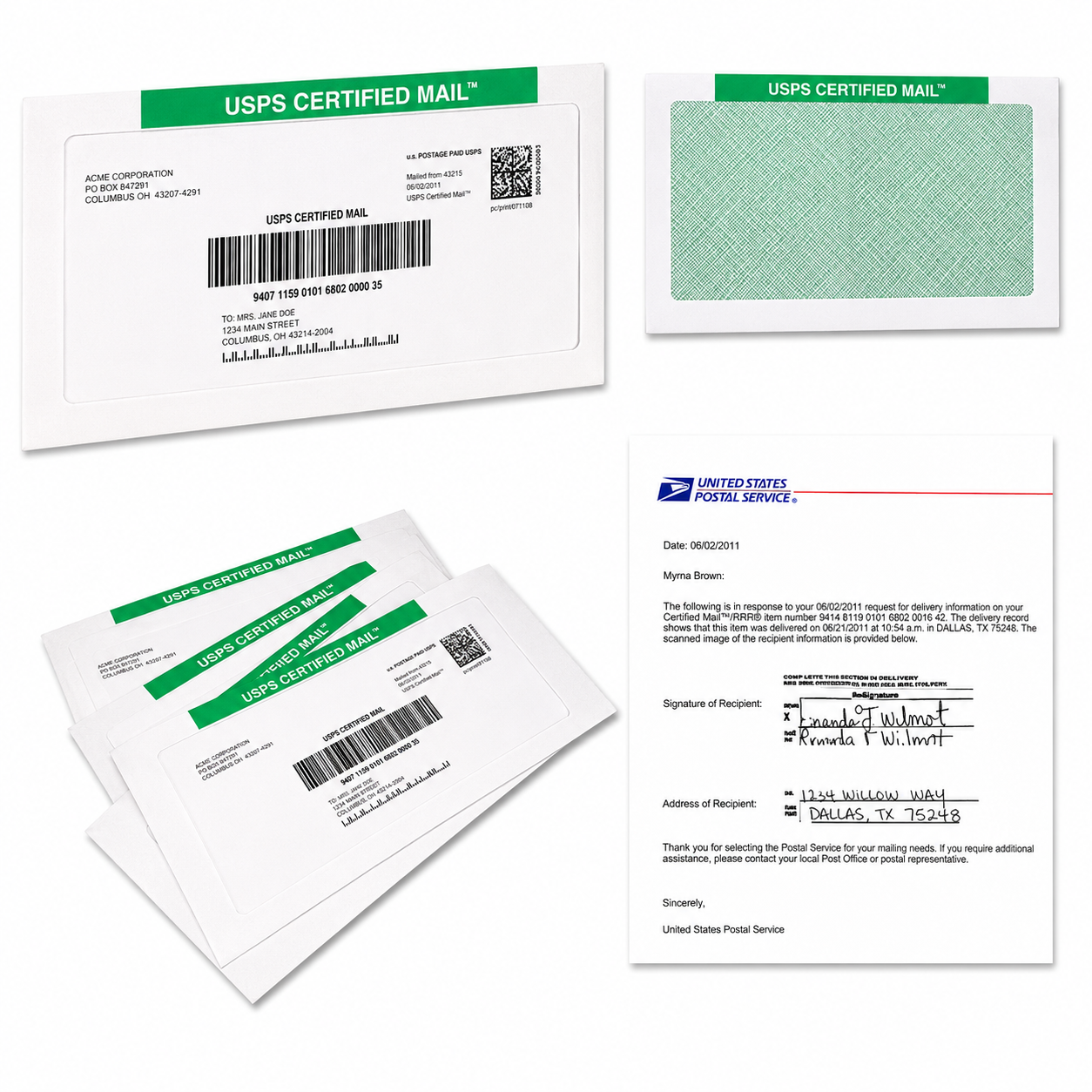
A deadline-day trip to the Post Office has never been a complete compliance strategy. You need a record that shows what you mailed, where you mailed it, when USPS accepted it, and how the mailing moved through the postal system.
That need became more important after the USPS postmark revision effective December 24, 2025. Under USPS DMM 608.11, as announced in Postal Bulletin 22694 and 90 FR 38716, machine-stamped postmarks reflect the date of the first automated processing operation. That date may not be the same date USPS first took possession of the mailpiece.
In plain language, mailing something on the deadline does not necessarily guarantee that a machine-stamped postmark will show the deadline date.
You may deposit a letter late in the day, place it in a collection box, or hand it to a location that does not immediately perform the first automated processing operation. The envelope may then receive a later machine postmark.
That is why you should execute and document the mailing, not merely assume that “I mailed it” will be enough.
How Do Registered and Certified Mail Change the Evidence?
The registered-mail rule provides a stronger record than ordinary mail. The registration date is treated as the operative date, and the registration date serves as prima facie evidence that the document was delivered to the agency, officer, or office to which it was addressed. See 26 U.S.C. § 7502(b).
For certified mail, the regulations provide an important protection. If the sender’s certified-mail receipt is postmarked by the postal employee to whom the document is presented, the date on that receipt is treated as the postmark date of the document. The regulation also recognizes properly issued certified-mail receipts and proper addressing as prima facie evidence of delivery. See 26 CFR § 301.7502-1.
That distinction matters:
- Ordinary mail may leave you trying to prove a machine postmark and eventual delivery.
- Certified mail creates a receipt, tracking number, acceptance record, and delivery history.
- An electronic return receipt USPS record can add recipient and signature information.
- A complete digital file gives your firm something concrete to produce during an audit, dispute, appeal, or court proceeding.
Certified Mail does not eliminate the need to use the correct IRS address, sufficient postage, and the correct filing procedure. It does give you a substantially better evidence package.
What Happens to Electronic Postmarks?
Electronic filings operate under a separate electronic-postmark framework. Under 26 CFR § 301.7502-1, an electronically filed document may be treated as filed on the date and time an authorized electronic return transmitter receives it, as reflected by the electronic postmark.
These rules were implemented through T.D. 8932, 66 FR 2258, effective January 11, 2001.
The lesson is the same for paper and electronic filings: retain the objective record. Save the transmission confirmation, acceptance notice, electronic postmark, and any rejection or correction notices.
Does the Tax Court 90-Day Deadline Use the Mailing Date?
Yes, the mailing date is central to the Tax Court petition deadline.
Under 26 U.S.C. § 6213(a), a taxpayer generally has 90 days after the mailing of a notice of deficiency to file a petition with the Tax Court. For certain taxpayers outside the United States, the period may be 150 days.
The notice of deficiency is mailed to the taxpayer’s last known address under 26 U.S.C. § 6212.
Because the deadline is jurisdictional, your process should not depend on a last-minute assumption about a postmark. Confirm the deadline, prepare the petition early, use a documented mailing method, and preserve every related record.
In T.C. Memo. 2015-188, Tilden, the Tax Court examined USPS tracking information as the functional equivalent of a postmark when no official USPS postmark appeared. The case illustrates why postal records may become important when the physical envelope does not clearly establish the mailing history. It also illustrates the risk of relying on an incomplete record set.
Tracking data is valuable evidence. But tracking data should not be treated casually as a substitute for following the certified-mail and postmark requirements. Your goal is to create the strongest available record before the deadline.
How Can You Prove Your Mailing Date?
Use this checklist for each time-sensitive tax mailing.
What Should You Confirm Before Mailing?
- Confirm the filing or payment deadline, including extensions, weekends, and legal holidays.
- Confirm the correct IRS, Tax Court, or agency address.
- Confirm that the document is complete, signed, and ready to mail.
- Use sufficient postage and the required mailing class.
- Use USPS Certified Mail when you need a documented acceptance and delivery record.
- Add Electronic Delivery Confirmation or an electronic Return Receipt USPS record when recipient delivery evidence matters.
- Generate a unique mailing record for each document or batch.
What Should You Obtain at Acceptance?
- A certified-mail receipt showing the tracking number.
- A USPS acceptance scan or other record showing USPS possession.
- The postmark or acceptance date associated with the mailing.
- The Intelligent Mail Postal Barcode connected to the mailpiece.
- A receipt, manifest, or other postal record identifying the number of pieces mailed.
- For batch mailings, a complete mailing list tied to each tracking number.
What Should You Preserve After Mailing?
- A copy of the exact document mailed.
- A copy of the envelope or label showing the recipient address.
- The USPS certified mail tracking history.
- The USPS acceptance, processing, delivery, and attempted-delivery scans.
- The postmark date and Intelligent Mail Postal Barcode.
- Electronic return receipt and signature records, when requested.
- Any affidavit, manifest, or internal mailing certification.
- A searchable archive that preserves the complete record for the applicable retention period.
A useful record should allow another person to answer five questions quickly:
- What was mailed?
- To whom was it mailed?
- When did USPS accept it?
- What tracking and delivery events followed?
- Can the business produce the evidence years later?
How Can You Send Certified Mail Without a Post Office Trip?
You can create and print USPS Certified Mail Labels online using live postage and a standard office printer. This approach lets you prepare USPS Certified Mail labels from your home or office while keeping the mailing process organized and repeatable.
For larger mailing projects, Excel or CSV batch uploads let you prepare multiple addresses at once. That is useful for tax professionals, CPAs, attorneys, collection agencies, financial institutions, and businesses sending notices to many recipients.
If you do not want to print, fold, insert, and mail the documents yourself, Certified Mail Labels can print and mail your PDF letters the same business day for orders received before 5:00 p.m. Eastern. The service includes printing, envelope inserting, postage application, USPS mailing, and a notarized affidavit of mailing.
Your records can then be maintained in a 10-year searchable compliance archive, including certified mail tracking scans, USPS acceptance records, postmark dates, Intelligent Mail Postal Barcodes, delivery confirmations, and Electronic Return Receipt signature records.
The cost can also be lower than counter service. A 1-ounce Certified Mail letter with Electronic Delivery Confirmation is listed at $7.28, compared with $11.02 at the Post Office counter. There are no monthly fees, no contracts, and no equipment leases.
Why Should Your Firm Build a Repeatable Mailing Process?
The mailbox rule rewards timely mailing, but a defensible process proves timely mailing.
For IRS operations, certified-mail procedures also show the importance of structured records. IRS IRM 5.11.2 and interim guidance SBSE-04-0725-0047 address certified-mail procedures and the use of automated records, including the Certified Automated Mailing Solution, or CAMS. The guidance reflects the broader move away from informal manual processes and toward searchable manifests, acceptance records, barcode data, and retained delivery information.
Your firm can apply the same discipline:
- Prepare mailings from standardized templates.
- Use a consistent USPS Certified Mail process.
- Capture acceptance before the deadline whenever possible.
- Connect each document to its tracking number.
- Preserve the complete record in one searchable location.
- Avoid relying on memory, a handwritten note, or a photograph of an envelope.
- Build extra time into the process instead of mailing everything at the last minute.
Certified Mail Labels helps you execute and document the mailing process. It does not provide legal advice or determine whether a particular filing method satisfies your legal obligations. Confirm your specific filing, deadline, and evidence requirements with your own tax counsel.
Frequently Asked Questions About the Mailbox Rule
What Does “Timely Mailed, Timely Filed” Mean?
It means a qualifying document may be treated as filed on the date it was properly mailed and received a timely qualifying postmark, even if the IRS or Tax Court receives it later. The document must still meet the applicable mailing, addressing, postage, and delivery requirements.
Is Certified Mail Better Than Ordinary Mail for Tax Documents?
Certified Mail provides a stronger evidence package because it creates a receipt, tracking number, USPS acceptance record, and delivery history. For critical filings, it can reduce the risk of having to prove mailing through limited or ambiguous evidence.
Does USPS Always Postmark Mail on the Day I Deposit It?
No. Under USPS DMM 608.11, a machine-stamped postmark reflects the first automated processing operation and may not reflect the exact date USPS first took possession. This is why deadline-day mailings should include documented USPS acceptance and certified-mail records.
Is USPS Tracking the Same as a Postmark?
Not necessarily. Tracking can show acceptance, processing, and delivery events, but it should not automatically be treated as a statutory USPS postmark. Use certified-mail receipts and other postal records to create a complete evidentiary file.
How Long Should I Keep Certified Mail Records?
Retention requirements depend on the document, tax issue, claim period, and applicable professional or regulatory rules. A 10-year searchable archive gives you a practical way to retain tracking, acceptance, delivery, signature, and mailing records for long-term compliance needs.
Can I Print Certified Mail Online?
Yes. You can print USPS Certified Mail Labels online, prepare labels from home or your office, upload batches, or use a full-service print-and-mail option when you want the mailing handled for you.