
What It Means for Your Notice and Your Record
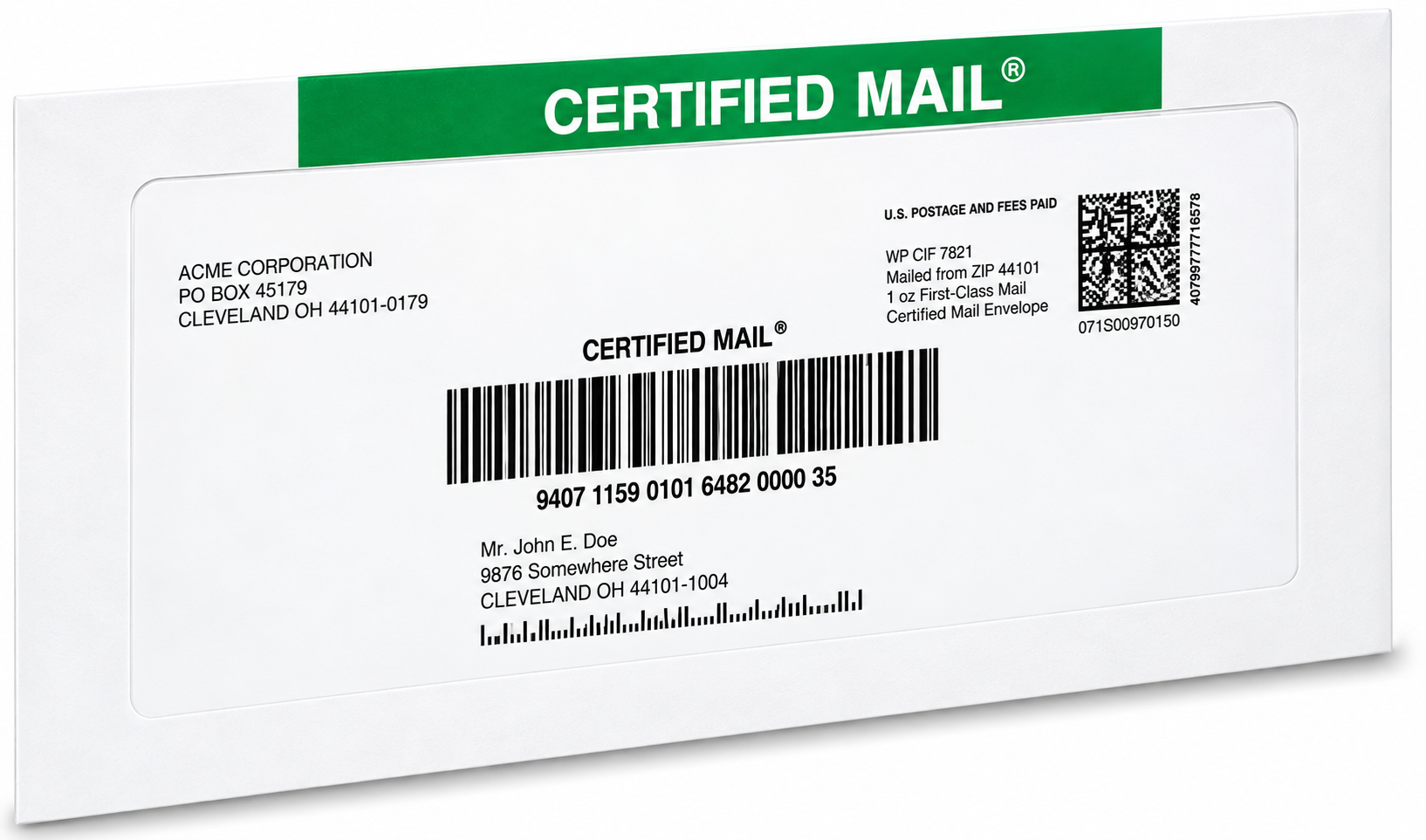
A Refused, Unclaimed, or Return to Sender status is a delivery outcome that you should preserve and evaluate under the governing notice rule. It is not automatically proof that legal notice was effective or ineffective. USPS records what happened to the mailpiece, while the applicable statute, regulation, contract, court rule, or agency procedure determines what that event may mean for your notice.
If an important notice comes back, preserve the envelope, tracking history, USPS acceptance proof, affidavit of mailing, address source, and returned mail together. Then ask counsel what rerouting, reposting, publication, substitute-service, or timing rules apply to your situation.
What Do Refused, Unclaimed, And Return-to-Sender Mean?
USPS Certified Mail is designed to provide the sender with a mailing receipt and a delivery record or electronic verification showing delivery or an attempted delivery. The governing USPS standards are in Domestic Mail Manual 503 and Quick Service Guide 503.
In practical terms:
| USPS Status | What The Postal Record Generally Shows | What It Does Not Automatically Prove |
|---|---|---|
| Refused | The mailpiece was offered for delivery and was declined or otherwise marked refused. | It does not automatically establish whether a legal notice was effective, whether the recipient saw the contents, or what action is required next. |
| Unclaimed | USPS attempted delivery or made the item available for pickup, but the addressee did not claim it within the applicable process. | It does not automatically mean the address was wrong, the recipient knew about the notice, or notice failed. |
| Return to Sender | The piece is being returned to the sender. Look for the more specific reason printed or marked on the envelope. | It does not, by itself, explain the legal consequence or replace the governing notice rule. |
| Attempted Delivery / Notice Left | USPS recorded an attempt or notification event. | It does not automatically equal delivery, receipt, or legally sufficient notice. |
| Delivered | USPS recorded delivery under the Certified Mail service record. | It does not automatically resolve every legal requirement, including content, timing, recipient, address, or service-method requirements. |
USPS is documenting a postal event. Your job is to preserve that event and connect it to the rule that applies to your notice.
What Is The Difference Between Refused And Unclaimed Certified Mail?
A refused piece generally indicates that delivery was offered but the mail was declined. An unclaimed piece generally indicates that the recipient did not claim the mail after an attempt or notice to pick it up.
That difference may matter when counsel evaluates the record. However, avoid treating either status as a guaranteed legal result. Different laws and procedures may apply to eviction notices, collection letters, insurance notices, employment communications, government notices, tax matters, foreclosure documents, and litigation-related mail.
The envelope may contain useful information, including:
- A refusal or unclaimed endorsement.
- A return-to-sender marking.
- A forwarding or address-correction notation.
- A USPS tracking barcode.
- Delivery-attempt dates or other postal markings.
- A returned PS Form 3811, if a hardcopy Return Receipt was purchased.
Keep the envelope in the condition in which you received it. Do not discard it after downloading the tracking record.
What Records Should You Preserve After A Certified Mail Return?
A strong notice file should allow someone else to understand what was sent, where it was sent, when it was accepted by USPS, what USPS recorded, and what happened afterward.
Preserve these items together:
- The original notice or PDF letter. Keep the exact version that was mailed, including attachments and enclosures.
- The envelope. Save all postal markings, endorsements, barcodes, labels, and return information.
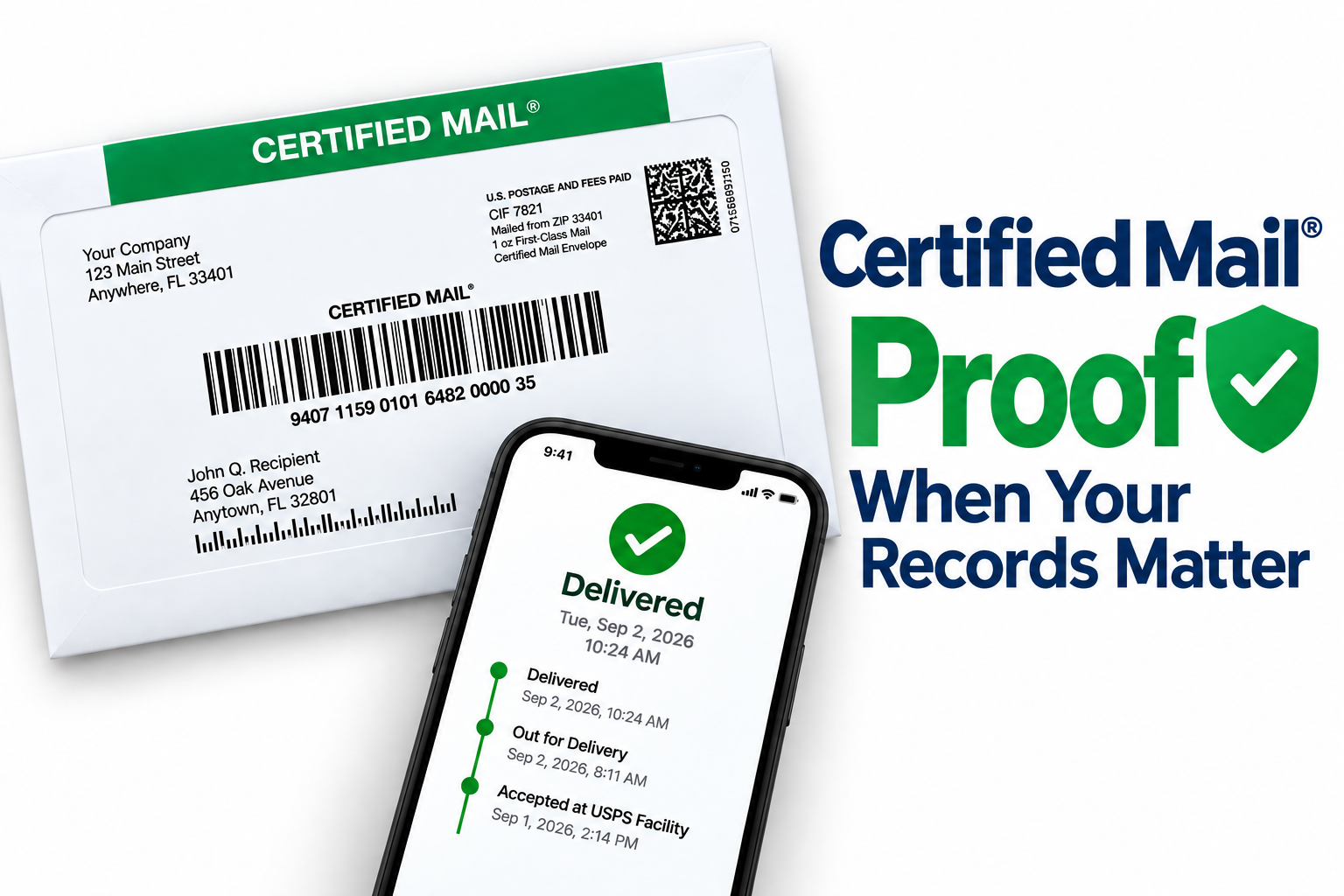
- The USPS tracking history. Download or save the full event history, not only the final status.
- The USPS acceptance proof. Keep the mailing receipt, acceptance scan, firm mailing record, or other available evidence showing the item entered the USPS mailstream.
- The affidavit of mailing. If your mailing provider supplies a notarized affidavit, retain it with the related tracking information.
- The address source. Save the document or system record showing where the address came from and when it was verified or obtained.
- The returned mail. Keep the complete returned piece, including any attached forms or receipt.
- The delivery or attempted-delivery record. DMM 503 explains that Certified Mail provides a mailing receipt and electronic verification that an article was delivered or that delivery was attempted.
- The Return Receipt record. If you purchased Electronic Return Receipt or a paper return receipt, preserve the record supplied by USPS.
- Internal mailing notes. Record who prepared the notice, who approved it, when it was mailed, and any follow-up steps.
Do not rely on a screenshot alone when a downloadable report or PDF is available. Store the original file and maintain a clear naming convention, such as recipient name, tracking number, notice type, and mailing date.
What Should You Do When Certified Mail Is Refused Or Unclaimed?
Use a consistent workflow every time. This helps your legal, compliance, operations, or customer-service team avoid missing a deadline.
Certified Mail Return Workflow Checklist
- Identify the recipient, notice type, governing rule, and applicable deadline.
- Save the original notice and every enclosure.
- Photograph or scan the front and back of the returned envelope.
- Preserve the physical envelope and returned contents.
- Download the complete USPS tracking and delivery-attempt history.
- Save the USPS acceptance receipt or acceptance scan.
- Save the affidavit of mailing, if available.
- Confirm the exact address used on the mailpiece.
- Preserve the source of that address and the date it was obtained.
- Record whether the status says Refused, Unclaimed, Return to Sender, or another reason.
- Check whether a forwarding address, address correction, or other postal notation appears.
- Preserve any paper or electronic Return Receipt.
- Ask counsel whether rerouting, reposting, publication, personal service, substitute service, or another step is required.
- Ask counsel how the governing rule calculates deadlines and notice periods.
- Record every follow-up action and the date it occurred.
The most important step is not guessing what the status means legally. The most important step is preserving enough evidence for counsel, an auditor, an agency, or a court to evaluate the event accurately.
How Can Online Certified Mail Help Preserve The Record?
When you create a USPS Certified Mail label online, you can keep the label information, tracking number, and mailing details connected from the beginning. With Certified Mail label printing, you can generate live-postage labels and print them on a standard office printer without a trip to the Post Office.
If you prefer not to handle printing and envelopes, you can upload your PDF and use Print & Mail. Certified Mail Labels can print, insert, apply postage, and submit qualifying orders to USPS the same business day when received before 5:00 PM Eastern. The mailing record can include USPS acceptance information, tracking, delivery or attempted-delivery information, and a notarized affidavit of mailing.
For organizations sending notices at scale, bulk mailing and USPS SCAN Form support can help organize large batches. You can work from Excel or CSV files and use automated workflows such as API or secure SFTP transfers.
When a signature record is important, ask about Electronic Return Receipt options. The electronic record can provide available USPS delivery and signature information without requiring you to manage a paper green card.

Why Is A Searchable Archive Useful For Returned Mail?
Returned mail often becomes important weeks, months, or years after the original mailing. A paper receipt in a drawer may be difficult to locate, especially when your team sends hundreds or thousands of notices.
A searchable digital archive helps you locate records by tracking number, recipient, address, mailing date, status, or internal reference. Certified Mail Labels provides a 10-year compliance archive for available mailing records, USPS acceptance information, tracking events, delivery confirmations, and signature records.
An archive does not determine whether your notice complied with the law. It does help you retrieve the facts needed to evaluate that question.

Frequently Asked Questions About Refused And Unclaimed Certified Mail
Is Refused Certified Mail Proof That Legal Notice Was Effective?
No. A refused status is a USPS delivery outcome showing that the mailpiece was declined or marked refused. Whether that event satisfies a notice requirement depends on the governing law, rule, contract, or procedure. Ask counsel to evaluate the complete record.
Is Unclaimed Certified Mail The Same As Refused Mail?
No. Refused generally indicates that delivery was declined, while unclaimed generally indicates that the item was not claimed after an attempt or pickup notice. Preserve both the USPS status and the returned envelope because the distinction may matter under the applicable rule.
Does Return To Sender Mean My Notice Failed?
Not automatically. Return to Sender means USPS returned the mailpiece. The specific reason, address used, delivery attempts, timing, and governing notice rule must be reviewed together. Do not assume the notice was effective or ineffective based only on the return marking.
What Should I Keep When Certified Mail Comes Back?
Keep the original notice, envelope, tracking history, USPS acceptance proof, affidavit of mailing, address source, returned mail, and any paper or electronic Return Receipt. Preserve both digital copies and the physical envelope whenever possible.
Should I Re-Mail A Refused Or Unclaimed Notice?
Ask counsel first. The correct next step may involve rerouting, reposting, publication, personal service, substitute service, or no additional mailing. Timing rules can be strict, so document the original mailing and obtain advice before acting.
Can Electronic Return Receipt Replace The Paper Green Card?
Electronic Return Receipt is an electronic alternative to the paper PS Form 3811 record when purchased with an eligible mailing and supplied by USPS. It can make delivery and signature information easier to retrieve. Confirm the requirements that apply to your specific notice before relying on any particular record.
Preserve The Postal Event, Then Evaluate The Legal Effect
Refused, Unclaimed, and Return-to-Sender Certified Mail should not be ignored or treated as an automatic legal answer. Preserve the physical and digital record, confirm the address and mailing date, review the USPS delivery history, and ask counsel what the governing notice rule requires next.
Start by creating your label online, upload your letter for Print & Mail, or organize your batch mailing with automated tools. You’ll save time, keep your records together, and make the next review faster and easier, without relying on a misplaced receipt or an incomplete tracking screenshot.