
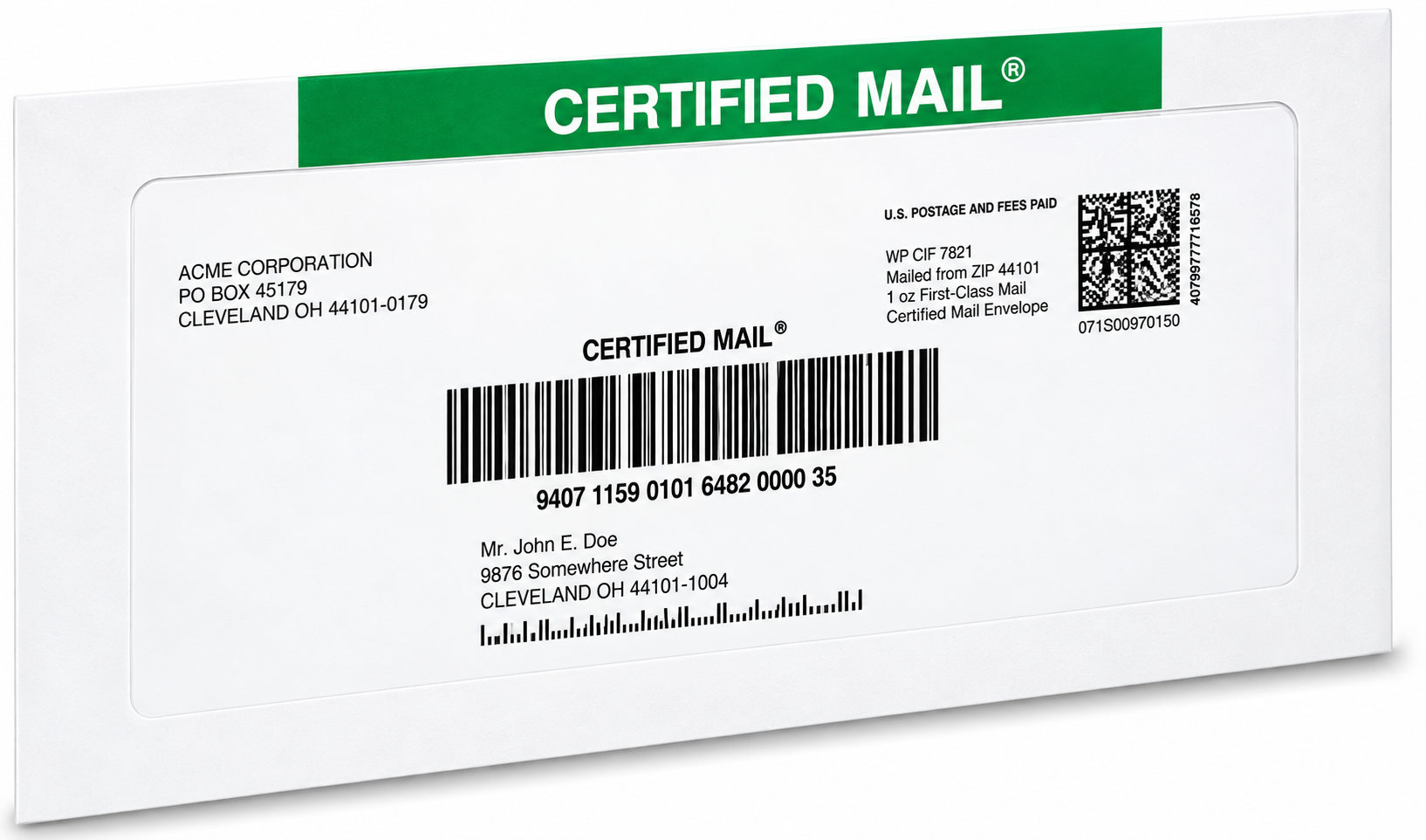
What must a proof-of-service record show? It should clearly identify who served the papers, why that person was eligible to serve them, exactly what was served, who received or was addressed, where it was sent or delivered, when service occurred, what method and mail class were used, and what third-party evidence confirms mailing, delivery, or signature. For federal litigation, the record should also support the affidavit, declaration, return, or certificate filed with the court under the applicable rule. Always confirm the service method and filing requirements with your own counsel and the applicable court’s local rules.
What Does FRCP 4 Require You To Prove?
Federal Rule of Civil Procedure 4 governs the summons and complaint. Your proof-of-service record should begin with the papers themselves and the authority for serving them.
Under FRCP 4(a), the summons must identify the court and parties, be directed to the defendant, state the plaintiff’s attorney or plaintiff information, provide the time to appear and defend, warn about default judgment, be signed by the clerk, and bear the court’s seal.
Under FRCP 4(b), the clerk signs, seals, and issues the summons after the complaint is filed. A summons must be issued for each defendant to be served, unless an addressed copy covers multiple defendants as permitted by the rule.
Your service record should therefore preserve:
- The issued summons, including the clerk’s signature and court seal.
- The complete complaint served with the summons.
- The defendant’s full name and service address.
- The date the summons and complaint were mailed or delivered.
- The person who performed the service.
- The tracking number, USPS acceptance scan, delivery event, signed receipt, or other confirmation.
Under FRCP 4(c), the summons must be served with a copy of the complaint. The server must be at least 18 years old and cannot be a party to the action.
That eligibility point belongs in the affidavit or declaration. A well-organized proof-of-service file should make it easy to show the server’s name, address or business information, age eligibility, nonparty status, and a statement describing exactly how the documents were served.
How Should You Document Waiver Requests Under FRCP 4(d)?
A request to waive service is different from formal service of a summons. Under FRCP 4(d), the written request must be sent by “first-class mail or other reliable means.” It must include the complaint, two copies of the waiver form, and a prepaid method for returning the waiver.
The request must also state the date it was sent. The defendant must receive at least 30 days, or at least 60 days when sent outside any U.S. judicial district, to return the waiver. If the defendant timely returns the waiver, the time to answer runs 60 days from the date the request was sent, or 90 days when sent outside the United States.
Your record should show:
- The date the waiver request was sent.
- The method used to send it.
- The address and person or entity addressed.
- The complaint and waiver materials included.
- The prepaid return method provided.
- The date the signed waiver was received and filed, if returned.
- Any delivery or return-to-sender information.
When a waiver is properly filed, formal proof of service is generally not required under the rule. Still, retaining the mailing record and the signed waiver protects the case file and helps demonstrate compliance with the waiver procedure.
What Must You Prove When Serving Outside The United States?
Foreign service requires special care. Under FRCP 4(f)(2)(C)(ii), one permitted method, when applicable and not prohibited by the foreign country’s law, is service by mail that the clerk addresses and sends to the individual and that requires a signed receipt.
Under FRCP 4(l)(2), service outside the United States may be proved by a receipt signed by the addressee or other evidence satisfying the court that the summons and complaint were delivered to the addressee.
For international matters, preserve more than a generic tracking page. Your file should include:
- The clerk-addressed mailing record.
- The destination country and complete recipient address.
- The date the clerk sent the documents.
- The mail service used and its signed-receipt requirement.
- The signed receipt or other delivery evidence.
- Any translation, treaty, foreign-authority, or court-order documentation required for the selected method.
Confirm the appropriate procedure with counsel before mailing internationally. The Hague Service Convention, foreign law, court orders, and local practice may affect the method that is available.
How Do You Prove Service On The United States Or A Federal Agency?
Service involving the United States, a federal agency, or a federal officer requires multiple destinations and careful addressing.
Under FRCP 4(i)(1)-(2), copies may need to be sent by “registered or certified mail” to:
- The civil-process clerk at the U.S. attorney’s office for the district where the action is brought.
- The Attorney General in Washington, D.C.
- The federal agency or officer, when required.
- Additional recipients depending on whether the action challenges an agency or officer order and whether the officer is sued in an official or individual capacity.
Your proof-of-service record should separate each required mailing. Do not rely on one tracking number when the rule requires multiple recipients.
For each mailing, capture:
- The exact recipient and title.
- The full mailing address.
- The date of mailing.
- The mail class, certified or registered mail where the rule names it.
- The USPS acceptance scan.
- The tracking number.
- Delivery, attempted delivery, or return information.
- Any signed receipt or Electronic Return Receipt USPS signature.
- A copy of the summons and complaint mailed.
A separate affidavit or declaration should identify each mailing and explain how the record corresponds to the service required by the rule.
When Is Service Timely Under FRCP 4(m)?
Under FRCP 4(m), a defendant generally must be served within 90 days after the complaint is filed. If service is not completed within that period, the court may dismiss the action without prejudice or order service within a specified time. If good cause exists, the court must extend the time for service for an appropriate period.
That makes the date trail essential. Keep:
- The complaint filing date.
- The summons issuance date.
- The date documents were placed in the mail or delivered.
- The USPS acceptance scan.
- Any delivery or attempted-delivery event.
- The filed proof of service and filing date.
A dated, third-party-generated record helps your team show what happened and when. It does not replace the legal analysis of whether the selected method was authorized, so confirm the timeline and service method with counsel.
What Is Different About FRCP 5 Service Of Later Papers?
FRCP 5 generally applies to pleadings and other papers served after the original complaint, including written motions, discovery papers, notices, and similar filings.
Under FRCP 5(b)(2)(C), a paper may be served by mailing it to the person’s last known address, and “service is complete upon mailing.”
This is why the dated mailing record matters. When service is complete upon mailing, the central proof is not only whether the recipient later opened the envelope. It is the evidence showing that the correct paper was addressed and placed into the mail on the service date.
Under FRCP 5(d)(1)(B), a certificate of service is generally required when a served paper is served by means other than filing through the court’s electronic-filing system. The certificate should specify the date and manner of service.
For mail service, your certificate should match the underlying record:
- Identify the paper served.
- Identify each recipient.
- State the address used.
- State the date of mailing.
- State that service was made by mail.
- Identify the applicable mail class or additional service used.
- Preserve USPS acceptance and tracking records.
How Does Bankruptcy Rule 7004 Change Mail Service?
Bankruptcy Rule 7004 provides mail-service options in adversary proceedings and certain contested matters. Under Bankruptcy Rule 7004(b), a copy of the summons and complaint may be served by “first-class mail, postage prepaid” within the United States, subject to the rule’s recipient and address requirements.
For individuals, the mailing may go to the dwelling or usual place of abode or where the individual regularly conducts business or a profession. For corporations and similar entities, the mailing may go to an officer, managing or general agent, or authorized agent. Under Bankruptcy Rule 7004(b)(9), service on the debtor is made by mailing to the address shown on the debtor’s petition or a filed writing.
Under Bankruptcy Rule 7004(e), the summons and complaint must be deposited in the mail within seven days after the summons is issued.
For each bankruptcy mailing, preserve:
- The issued summons.
- The complaint.
- The exact recipient and permitted address.
- The date the summons was issued.
- The date the mailing was deposited.
- The first-class mail record.
- USPS acceptance or tracking information when additional tracking is used.
- The affidavit, declaration, return, or other proof filed with the court.
- Proof of service on the debtor’s attorney when required under the applicable rules.
What If The Defendant Is An Insured Depository Institution?
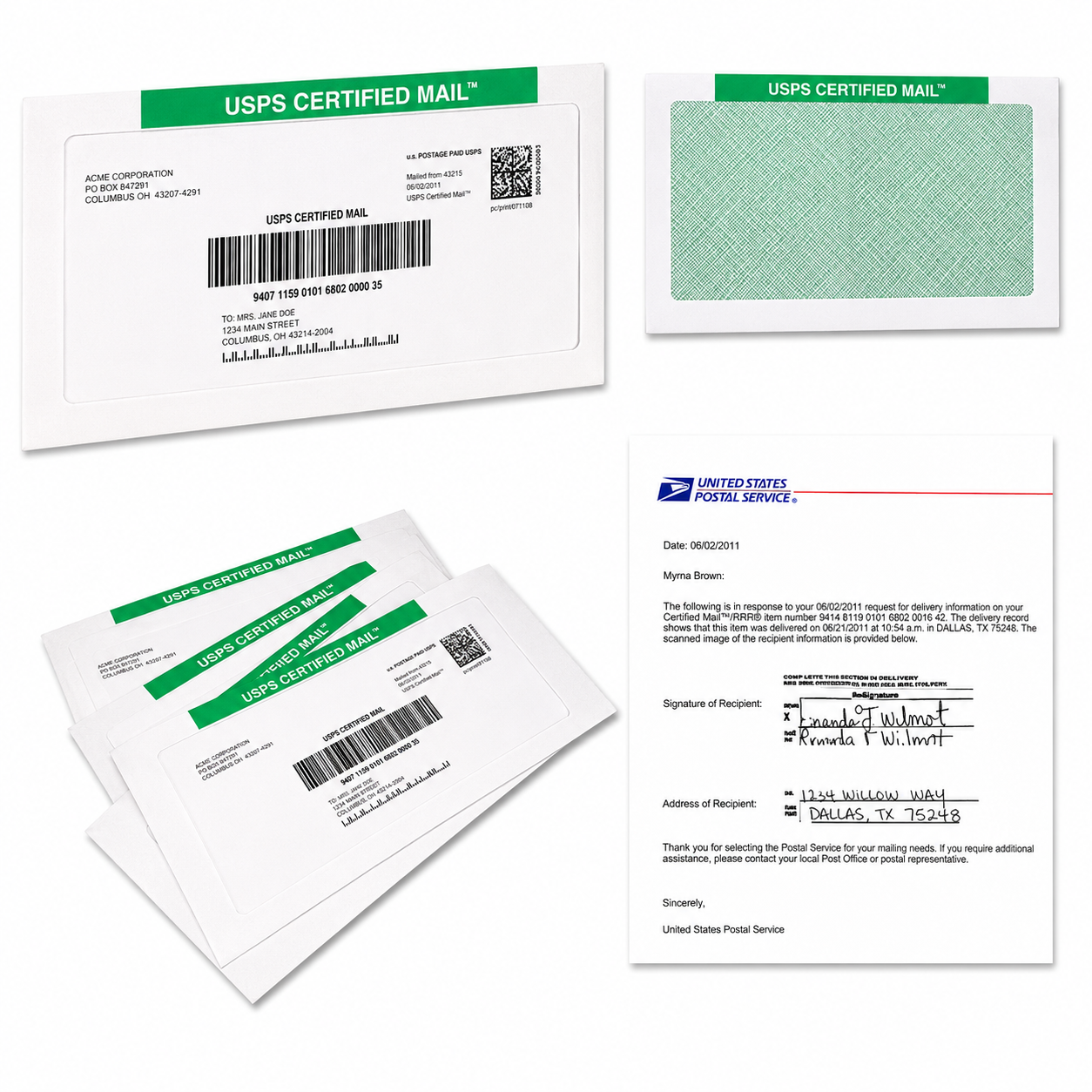
Under Bankruptcy Rule 7004(h), service of process on an insured depository institution in a contested matter or adversary proceeding “shall be made by Certified Mail addressed to an officer of the institution,” unless an exception applies.
The exceptions include service on the institution’s attorney after the institution has appeared, a court order allowing another method after the required Certified Mail notice, or a written waiver designating an officer.
The mailing record should show:
- The institution’s correct legal name.
- The proper address.
- The officer or permitted title.
- Certified Mail service.
- The USPS acceptance scan and tracking number.
- Delivery status.
- Any signed receipt or Electronic Return Receipt signature.
- The applicable exception, court order, appearance, or written waiver if certified mail was not used.
Bankruptcy Rule 7004(i) also provides that service by title may be sufficient. The envelope must be addressed to the defendant’s proper address and directed to the attention of the officer’s or agent’s position or title. Your mailing image or label record should preserve that wording exactly.
What Should A Federal Proof-Of-Service Record Show?
Use this checklist before filing your proof of service:
- Server’s full identity.
- Server’s eligibility, including age and nonparty status where required.
- Court, case number, and parties.
- Exact paper served.
- Issued summons and complaint, when applicable.
- Recipient’s full name, entity, officer, agent, or title.
- Complete address used.
- Date of mailing, delivery, or clerk transmission.
- Applicable mail class.
- Certified or registered mail when required by the rule or statute.
- USPS acceptance scan.
- USPS tracking number and event history.
- Delivery confirmation.
- Signed receipt or Electronic Return Receipt signature, when used or required.
- Affidavit, declaration, return, or certificate filed with the court.
- Separate proof for each required federal recipient.
- Timeliness under FRCP 4(m) or Bankruptcy Rule 7004(e).
- Proof that the debtor’s attorney was served when required.
- Local-rule and judge-specific filing requirements.
How Can You Build A Better Legal Compliance Mailing Workflow?
You can create and print USPS Certified Mail Labels online using Certified Mail Labels’ address-label platform. Generate live-postage labels, print from a standard office printer, and preserve the tracking information connected to each mailing.
If your team needs a complete mailing record, Print & Mail full-service processing includes PDF printing, envelope inserting, postage application, same-business-day USPS acceptance for orders received before 5:00 p.m. Eastern, and a notarized affidavit of mailing.
For litigation support departments and high-volume senders, bulk Certified Mail tools support Excel or CSV uploads, API integrations, and secure SFTP workflows.
You can also use Certified Mail Reports for Electronic Return Receipt signature capture, tracking scans, delivery confirmation, and a searchable 10-year compliance archive.
At listed rates, a 1-ounce Certified Mail letter with Electronic Delivery Confirmation is $7.28 compared with $11.02 at the Post Office counter. There are no monthly fees, no contracts, and no equipment leases.
What Are The Most Common Questions About Federal Proof Of Service?
Does certified mail automatically prove service?
No. Certified mail creates valuable third-party evidence of mailing, acceptance, tracking, delivery, and sometimes signature. Whether it is an authorized method of service depends on the applicable federal rule, statute, court order, and local rule.
Is USPS tracking enough for a proof of service?
USPS tracking is an important part of the record, but it should be matched with the exact paper served, recipient and address, mailing date, mail class, and a server affidavit, declaration, return, or certificate when required.
When is service complete by mail under FRCP 5?
Under FRCP 5(b)(2)(C), service by mailing to the person’s last known address is complete upon mailing. Preserve the dated mailing record and certificate of service.
What deadline applies to bankruptcy mail service?
Under Bankruptcy Rule 7004(e), a summons and complaint served by mail must be deposited in the mail within seven days after the summons is issued. Confirm all additional deadlines and local procedures with counsel.
Does a signed receipt prove every required service element?
No. A signed receipt can show delivery or acceptance, but the full record should still identify the paper, recipient, address, date, method, mail class, server, and applicable rule.
A reliable federal proof-of-service workflow is built around one goal: execute and prove the service your rule requires. Use a dated affidavit of mailing, USPS acceptance scan, scan-level tracking, delivery confirmation, and Electronic Return Receipt signature when appropriate. Then preserve the complete record so your court filing can answer the basic questions quickly and clearly.
Confirm the method with your own counsel, select the correct service option, and use Certified Mail Labels to print certified mail online, track each mailing, and maintain a searchable compliance record without a trip to the Post Office.