
What Counts as Proper Service
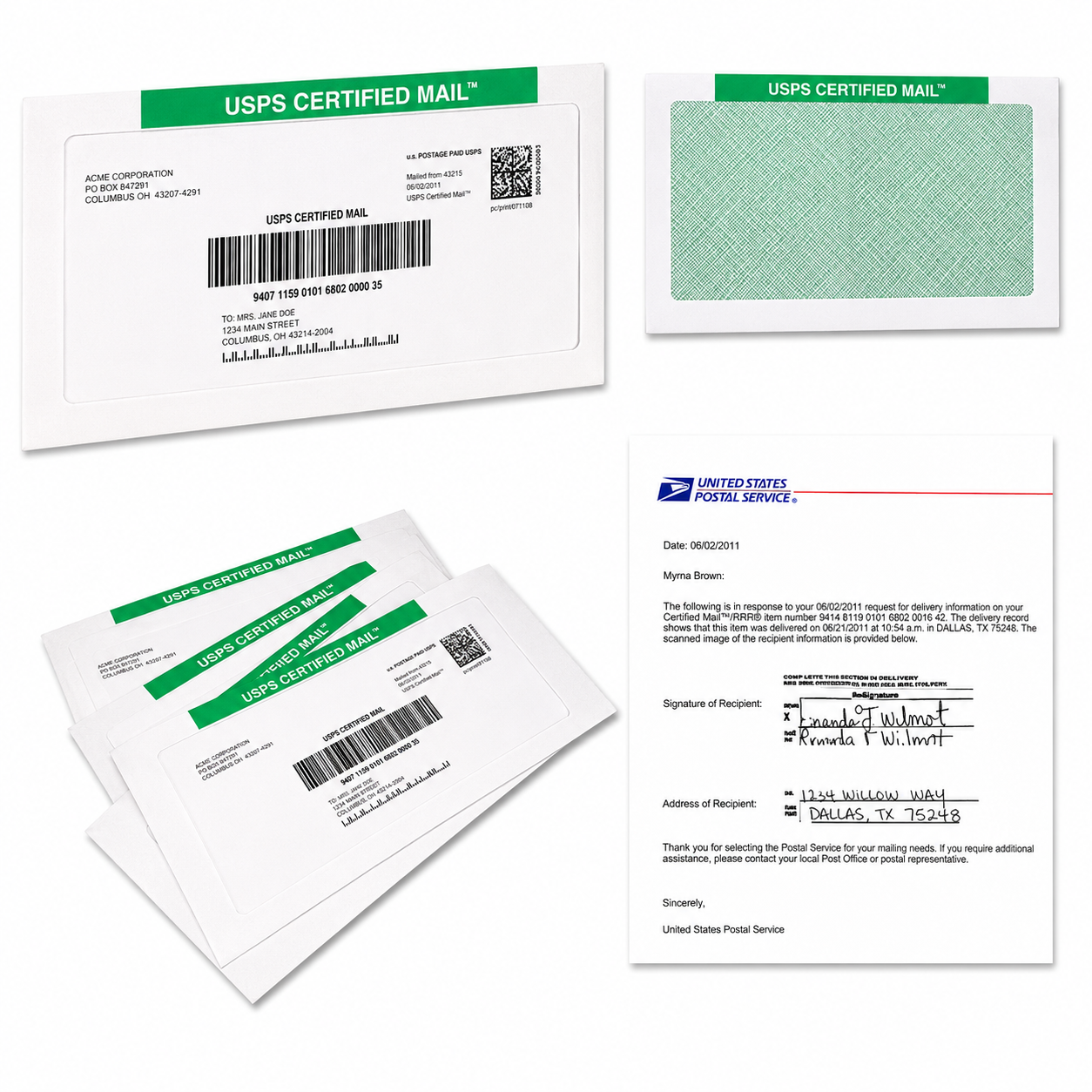
Last Reviewed: October 2026
This page is reviewed every January and again after any state legislative session that amends the service statute.
If you are mailing a family-law, custody, or child support notice, proper service depends on the state, the type of filing, and the specific rule that applies. Some states allow USPS Certified Mail for certain notices. Some allow mail only when the recipient signs and returns an acknowledgment. Other filings require personal service, and protective-order notice rules are usually special. This is a general guide about mailing mechanics, not legal advice. Family-law service rules are technical and change often, confirm the current rule for your state with your own counsel or your court clerk’s office.
What Counts as Proper Service by Mail in Family-Law Cases?
Proper service is more than putting court papers in an envelope. You must use the method authorized for that filing, send the correct documents, use the correct address, complete any acknowledgment or return-receipt requirement, and preserve proof for the court.
In general, states use several different approaches:
- Certified Mail, Return Receipt Requested: The statute may specifically authorize USPS Certified Mail and require proof of delivery or a return receipt.
- Mail Plus Signed Acknowledgment: The recipient must sign and return a statutory acknowledgment form before service is complete.
- Personal Service: A sheriff, constable, process server, or other authorized person must deliver the papers.
- Special Notice Procedures: Protective orders, emergency custody matters, and certain enforcement proceedings may use separate rules.
- Publication or Substituted Service: These are often last-resort methods after ordinary service attempts are unsuccessful or not feasible.
That is why searching “how to send certified mail” is only the first step. You also need to confirm whether your state permits certified mail for your exact notice and whether the sender, clerk, or process server must complete the mailing.
Which States Clearly Illustrate the Differences?
The following examples are based on verified primary statutes. They are useful examples, but they are not a 50-state survey.
| State and authority | What the rule allows | Important requirement |
|---|---|---|
| Texas Family Code § 35.004 | In a temporary authorization proceeding for care of a minor child, a copy of the petition and hearing notice may be delivered by personal service or certified mail, return receipt requested. | Mail must go to the parent’s, conservator’s, or guardian’s last known address. Proof of service must be filed at least three days before the hearing. |
| Texas Family Code § 102.010 | In a suit affecting the parent-child relationship, citation by publication may be used for people who cannot be notified by personal service or registered/certified mail. | Publication is a later route, not a substitute for required service attempts. |
| California Code of Civil Procedure § 415.30 | A summons and complaint may be served by mail with two acknowledgment forms and a return envelope. Family-law civil procedure may use this mail-plus-acknowledgment framework. | Service is complete when the written acknowledgment is executed and returned. If it is not returned within 20 days, another permitted service method may be needed. |
| California Family Code § 3429 | In a child custody proceeding, each party must provide sworn information about the child’s current location, five-year residence history, and people with whom the child lived. | Accurate address and custody-history information matters. The court may stay the proceeding until required information is provided. |
| New York CPLR § 312-a | A summons and complaint, summons and notice, or notice of petition and petition may be served by first-class mail with a statement and acknowledgment form. | Service is complete when the signed acknowledgment is mailed or delivered. The recipient generally has 30 days from receipt to return it, and the acknowledgment serves as proof of service. |
How Does Texas Treat Certified Mail for Family Matters?
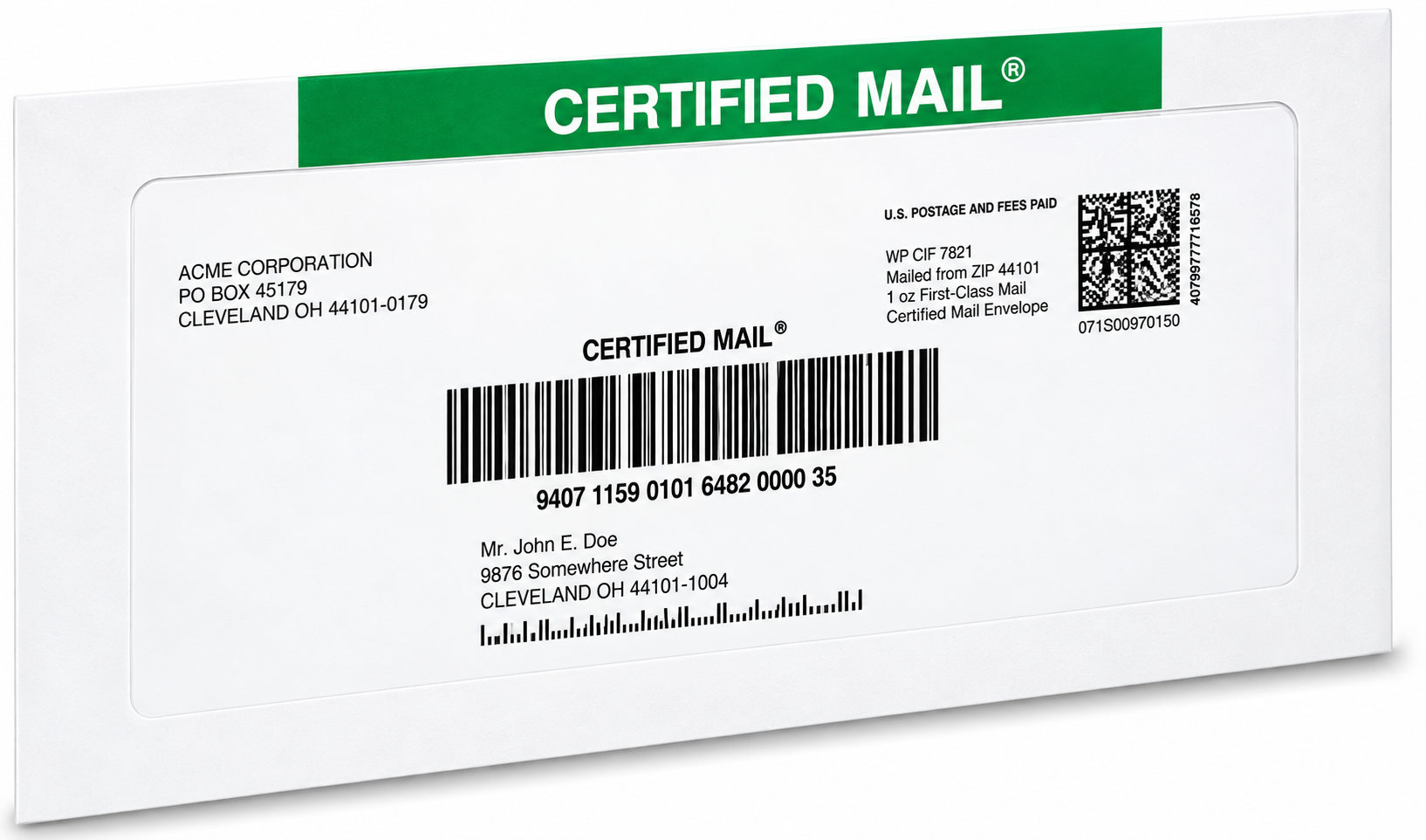 Texas Family Code § 35.004 is a clear example of a family-law statute that names certified mail directly. In a temporary authorization proceeding for care of a minor child, the petition and hearing notice may be delivered by personal service or by certified mail, return receipt requested, to the last known address of the parent, conservator, or guardian.
The statute also requires proof of service to be filed with the court at least three days before the hearing. That filing deadline makes your acceptance receipt, tracking history, return receipt, and service affidavit important records, not paperwork to discard after mailing.
Texas Family Code § 102.010 provides another useful distinction. In a suit affecting the parent-child relationship, citation by publication may be used when a person cannot be notified by personal service or registered or certified mail. In other words, certified or registered mail may be part of the service effort before publication is considered.
Do not assume, however, that § 35.004 controls every Texas child support, custody, divorce, or enforcement filing. Initial citations and other court documents may be subject to different Texas rules and authorized-server requirements. Confirm the exact procedure with the clerk or your lawyer.
What Is the California Mail-Service Requirement?
California Code of Civil Procedure § 415.30 describes a mail-plus-acknowledgment process. The sender mails the summons and complaint, two copies of the notice and acknowledgment, and a prepaid return envelope.
The important point is that ordinary delivery alone does not complete service under this process. The recipient must execute and return the acknowledgment. California law states that service is complete on the date the written acknowledgment is executed, if it is returned to the sender. If the form is not returned within 20 days, the sender may need to use another method permitted by law.
California Family Code § 3429 addresses a different but closely related issue: accurate information in child custody proceedings. Each party must provide sworn information, when reasonably ascertainable, about the child’s present address or whereabouts, where the child lived during the prior five years, and the names and present addresses of people with whom the child lived.
That requirement shows why address accuracy is central to legal compliance mailing. Before you prepare USPS Certified Mail labels, compare the mailing address with the court record, current pleadings, and instructions from counsel. In cases involving domestic violence or child abuse, certain addresses may be confidential. Do not disclose protected information casually.
Protective-order notice rules are special and may involve the sheriff or law enforcement. Never assume the California civil mail procedure, or a certified mailing workflow, is enough for an emergency or protective-order matter.

How Does New York Allow Service by Mail?
New York CPLR § 312-a allows personal service by mail as an alternative to other personal-service methods. The sender may mail a summons and complaint, summons and notice, or notice of petition and petition with two copies of a statement of service by mail and acknowledgment of receipt, plus a prepaid return envelope.
Under the statute:
- The recipient, an authorized employee, attorney, or attorney employee must complete and return the acknowledgment.
- The acknowledgment must be returned within 30 days after receipt.
- Service is complete when the signed acknowledgment is mailed or delivered to the sender.
- The signed acknowledgment constitutes proof of service.
- When a petition is served with the notice, the answer is due 20 days after the signed acknowledgment is mailed or delivered.
New York’s rule is a good reminder that certified mail is not always the legal requirement. A first-class mail process with the correct statutory forms may be authorized. Adding certified mail can create a stronger mailing record, but it does not replace the acknowledgment required by CPLR § 312-a.
Why Use Certified Mail When Your State Allows It?
When the applicable rule allows certified mail, it can make your service record easier to organize and explain.
Here are just a few practical advantages:
- You’ll receive a USPS acceptance record showing when the item entered the mailstream.
- You’ll get certified mail tracking tied to a unique article number.
- You can document delivery events and dates used when calculating response or hearing deadlines.
- You can request a return receipt when the statute, court, or counsel calls for delivery confirmation or a signature.
- You’ll preserve evidence of an unsuccessful attempt or refusal instead of relying on an undocumented ordinary mailing.
- You can keep the mailing record with the case file for audits, hearings, and later disputes.
- You won’t need to make an unnecessary trip to the Post Office when you create and print USPS Certified Mail labels online.
A return receipt can show the delivery address, delivery date, and signature information. It does not automatically prove that every service requirement was satisfied. The court may require a particular form, a particular sender, or proof signed by an authorized server. Treat certified mail as a documentation tool, not as a universal substitute for legal procedure.
What Should You Keep in Your Service File?
Before sending any family-law or child support notice, use this basic checklist:
- Confirm the exact state statute, court rule, and type of filing.
- Ask whether certified mail is required, permitted, or not sufficient.
- Match the address to the current court record and service instructions.
- Check whether the filing requires an acknowledgment form.
- Check whether the clerk, sheriff, process server, agency, or attorney must mail the papers.
- Keep a copy of every document placed in the envelope.
- Save the USPS acceptance receipt and tracking number.
- Save the delivery record, return receipt, or electronic return receipt.
- Calendar deadlines from the legally applicable service or acknowledgment date.
- File proof of service by the court’s deadline.
For a simpler workflow, use our Certified Mail Label printing flow to create and print labels online. If you need a signature record, review our Electronic Return Receipt USPS option. It provides a digital delivery record that is easier to download, store, and retrieve than a paper green card.
How Can Child Support Agencies and Counties Handle High-Volume Mailings?
State child support agencies, county prosecutors, and IV-D offices may send hundreds or thousands of enforcement letters, modification notices, payment demands, and hearing notices. Preparing each item manually creates avoidable delays and increases the risk of address, label, or recordkeeping errors.
A bulk certified mail process can help you:
- Upload Excel or CSV address lists.
- Produce bulk certified mail labels in a repeatable workflow.
- Use API integrations for recurring enforcement notices.
- Transfer approved files through secure SFTP.
- Track each mailing by USPS article number.
- Retrieve electronic delivery confirmation and signature records.
- Maintain a searchable archive for audits and case files.
Review our Excel and bulk Certified Mail tools and API/SFTP automation options. Our platform also supports a 10-year searchable compliance archive for mailing records, USPS acceptance scans, tracking events, delivery confirmations, and signature records.
If your team does not want to print and insert letters, use our Print & Mail full-service workflow. Upload the notice PDF and address list, and we can print, insert, apply postage, and mail the documents the same business day for orders received before 5:00 p.m. Eastern.
Family Law and Child Support Service by Mail FAQ
Can I use Certified Mail for every child support notice?
No. Certified mail is authorized for some notices and proceedings, but other filings may require personal service, an acknowledgment form, or service by an authorized officer. Confirm the exact state and case rule before mailing.
Is a USPS Return Receipt the same as a signed acknowledgment?
No. A USPS Return Receipt is a postal delivery record. A statutory acknowledgment is a court-required form that may determine when service becomes complete. Some states require one, the other, or both.
Does Certified Mail prove proper service?
Not by itself. Certified mail can document acceptance, tracking, delivery, and a signature. Proper service also depends on the correct documents, address, sender, timing, forms, and filing of proof.
What if the recipient refuses Certified Mail?
Do not assume refusal automatically completes service or defeats service. Save the USPS tracking and refusal record, then ask counsel or the clerk what the state rule requires next.
How do I calculate the response deadline?
Use the date required by the applicable statute or court rule. That may be a delivery date, acknowledgment date, or another legally defined event. Do not calculate solely from the date you printed the label.
Can agencies send bulk certified mail online?
Yes. Agencies and counties can use Excel or CSV uploads and may use API or SFTP automation for recurring, high-volume legal compliance mailing. Build the workflow around the agency’s approved procedures and required case records.

Ready to Make Your Mailing Process Easier?
Start by confirming the rule for your state and filing. Then create your label, preserve the USPS record, track delivery, and store the proof where your team can find it later.
Use Certified Mail Labels to send certified mail online, reduce certified mail cost and administrative work, and keep your legal compliance mailing records organized, without a trip to the Post Office.