
What It Means for Your Proof of Mailing, and How to Protect Your Record
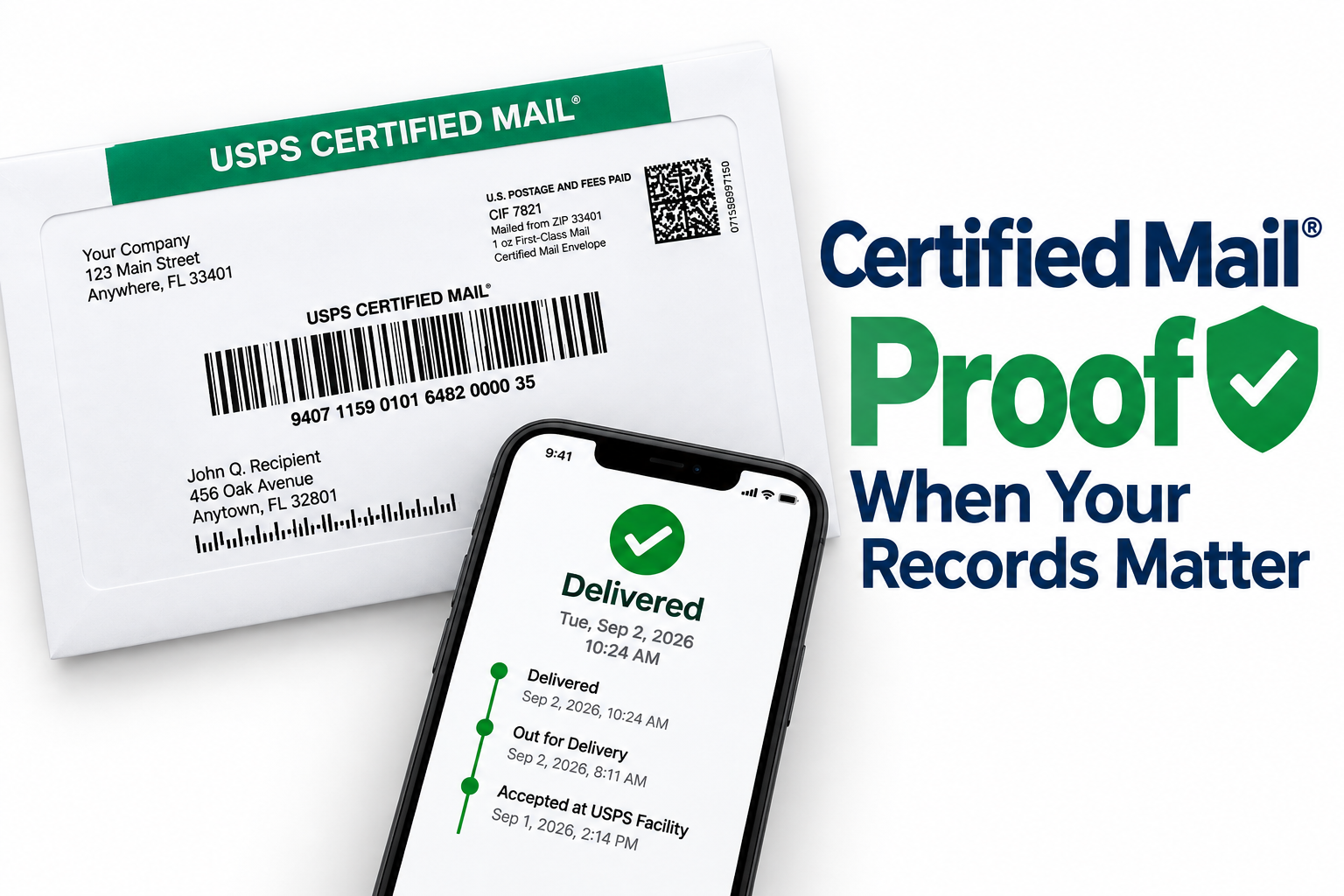
Why is your Certified Mail tracking not updating? USPS Tracking can show gaps when an acceptance, in-transit, or delivery scan is delayed, missed, or not uploaded immediately. A missing scan does not automatically mean your mailing did not happen or that your proof is gone. The stronger record is the documentation you kept around the mailing, including the Certified Mail receipt, postmark date, acceptance record, manifest, and affidavit of mailing.
Is A Missing Certified Mail Scan The Same As A Failed Mailing?
No. A missing scan is not the same as a missing mailing, and “no scan” is not the same as “no delivery.”
USPS Tracking is an event-based visibility tool. It does not provide a continuous location signal for every letter. A Certified Mail piece may be accepted, processed, transported, or delivered even when one of those events never appears on the public tracking page.
Your proof of mailing is the complete record you built, not just one status line on a tracking website.
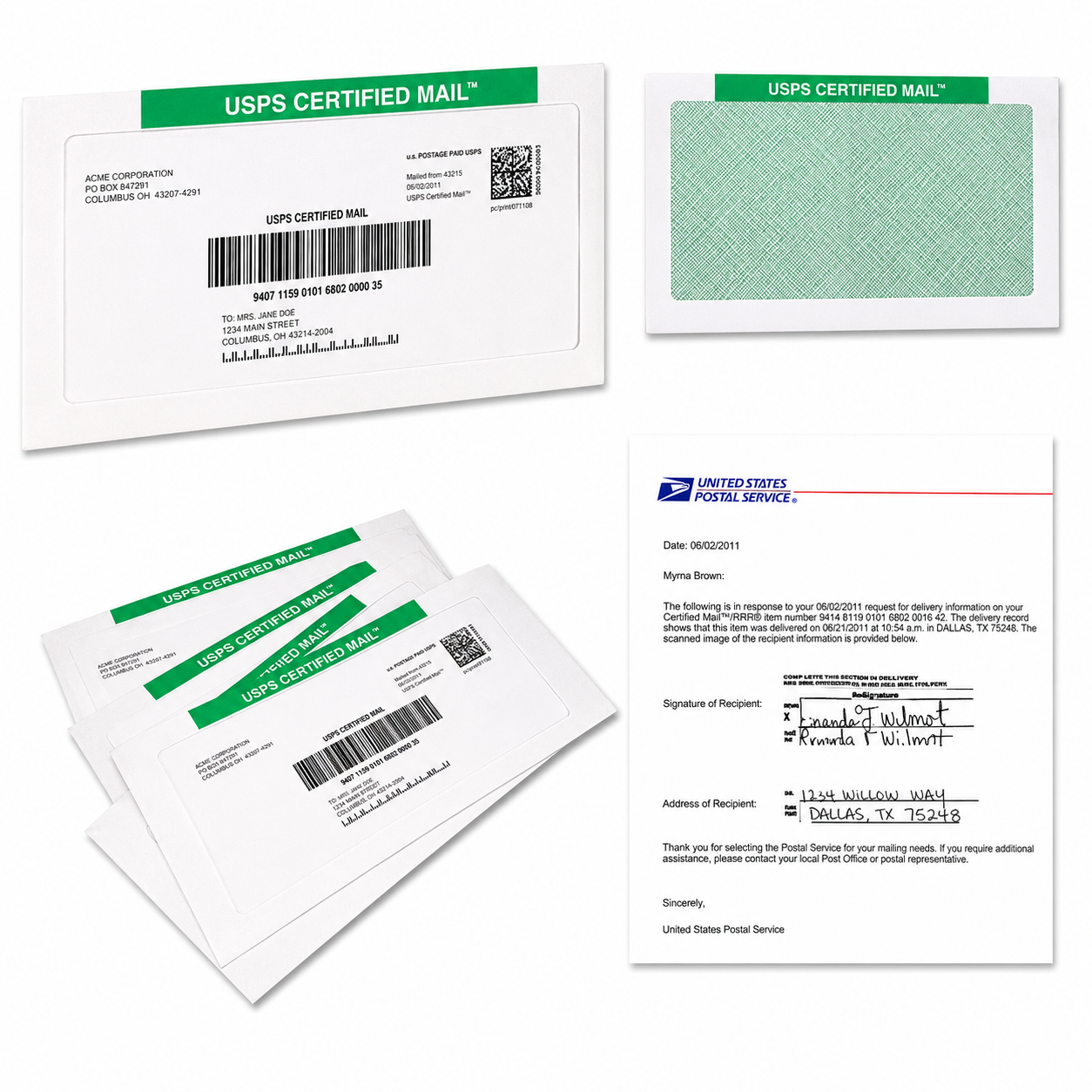
That record may include:
- Your Certified Mail receipt and tracking number
- The USPS postmark or dated acceptance receipt
- The acceptance scan
- A mailing manifest or USPS SCAN Form for a bulk mailing
- A copy of the letter and address used
- Electronic Delivery Confirmation or a Return Receipt
- A notarized affidavit of mailing
- Archived tracking, acceptance, and delivery events
This is how you build the record your statute or policy requires. It is not legal advice, and the documents needed for your situation may depend on the applicable law, contract, agency rule, or internal policy.
What Is Happening Behind The Scenes At USPS?
A Certified Mail barcode can be read at several points in the mailstream:
- When USPS accepts the mail
- When the mail is processed at a facility
- When it reaches a delivery unit
- When delivery is attempted or completed
- When a signature or delivery event is recorded
Those scans are transmitted into USPS systems and then displayed through USPS Tracking. The information can appear later than the physical event, and not every handling point produces a new public scan.
USPS explains that tracking information is updated as scan data becomes available. The USPS Tracking basics page also recognizes that a piece may be delivered even when a delivery scan was not captured.
That is why you should treat tracking as a convenience layer and your mailing documentation as the record layer.
Why Has Your Certified Mail Tracking Stopped Updating?
Several ordinary situations can create a tracking gap.
The Acceptance Scan Was Missed Or Delayed
If you handed the mail to USPS but the acceptance event does not appear, the clerk scan may have been delayed, missed, or transmitted later. This is especially important when the mail was submitted as part of a larger mailing.
The absence of an online acceptance event does not erase a dated USPS receipt, postmark, manifest, or other acceptance record.
The Mail Is Moving Between Facilities
In-transit scans are not continuous. A letter can be moving between processing locations while the tracking page shows no change for a day or more.
Weekends, holidays, transportation timing, processing volume, and data transmission can also create normal gaps.
The Delivery Scan Has Not Posted Yet
A delivery scan may be delayed even after the mail reaches the destination area. In some cases, the letter may be delivered without a visible delivery event.
For a time-sensitive record, save the tracking page as it appears, but do not rely on the final online status as the only evidence of what happened.
The Recipient Refused Or Did Not Claim The Mail
Certified Mail may show a notice, attempted delivery, refusal, or unclaimed status. Those events are different from a lost mailing. They can show that USPS attempted to present the mail or that the recipient did not complete the delivery process.
Keep the original mailing record and any Return Receipt, Electronic Delivery Confirmation, or return-to-sender information associated with the piece.
The Barcode Was Mis-Scanned Or Damaged
A barcode can be difficult to read if it is folded, smudged, damaged, covered, or printed poorly. A scan can also be associated with the wrong handling event or fail to connect cleanly to the public tracking page.
That may create an incomplete or confusing history. It does not automatically mean the letter was never accepted or never delivered.
What Should You Do When Tracking Is Not Updating?
Use a calm, document-first process.
1. Wait Through The Normal Initial Window
If the mailing was created or accepted recently, allow one to two business days for the first scan or update to appear. Tracking can lag behind the physical movement of the letter.
Do not discard your receipt while waiting.
2. Check The Acceptance Date
Look at the date on your Certified Mail receipt, postmark, counter receipt, or other acceptance document. The date you need to establish may be the mailing date, not the date the tracking page last changed.
For certain federal tax filing and payment matters, 26 U.S.C. § 7502 addresses the postmark and timely-mailed principle. The application of that statute and related regulations depends on the specific matter.
The related regulations add important support and limits. Under 26 CFR § 301.7502-1(c)(2), for Certified Mail, the postmark on the sender's receipt is treated as the postmark date. Under 26 CFR § 301.7502-1(e)(2)(i), properly used registered or Certified Mail is the exclusive means, besides actual delivery or a designated private delivery service, of establishing prima facie evidence of delivery. Under 26 CFR § 301.7502-1(d), an electronic postmark can also matter in qualifying situations.
There are also important boundaries. Under 26 U.S.C. § 7502(d)(1), the mailbox rule does not apply to filings in any court other than the Tax Court. Under 26 U.S.C. § 7502(d)(3), it does not apply where the law requires delivery by a method other than mailing.
3. Pull The Complete Mailing Record
Gather the documents connected to the piece:
- Certified Mail receipt
- Postmark or dated USPS acceptance
- Tracking number
- Copy of the mailing
- Recipient address
- Return Receipt or Electronic Delivery Confirmation
- Affidavit of mailing
- Manifest or SCAN Form, if applicable
This is the record you can present for an audit, dispute, compliance review, or internal investigation.
4. Request The Archive
If your organization uses a digital mailing platform, retrieve the archived transaction instead of searching through email, paper folders, and individual tracking pages.
A searchable archive should allow you to locate the mailing by tracking number, recipient, address, date, reference, or status.
5. Escalate With The Acceptance Document
If an inquiry is necessary, lead with the dated acceptance document, postmark, receipt, manifest, or SCAN Form, not only the tracking number.
The tracking number helps USPS locate the electronic record. The acceptance document helps establish when and how the mail entered the USPS system.
How Does A SCAN Form Protect A Bulk Mailing?
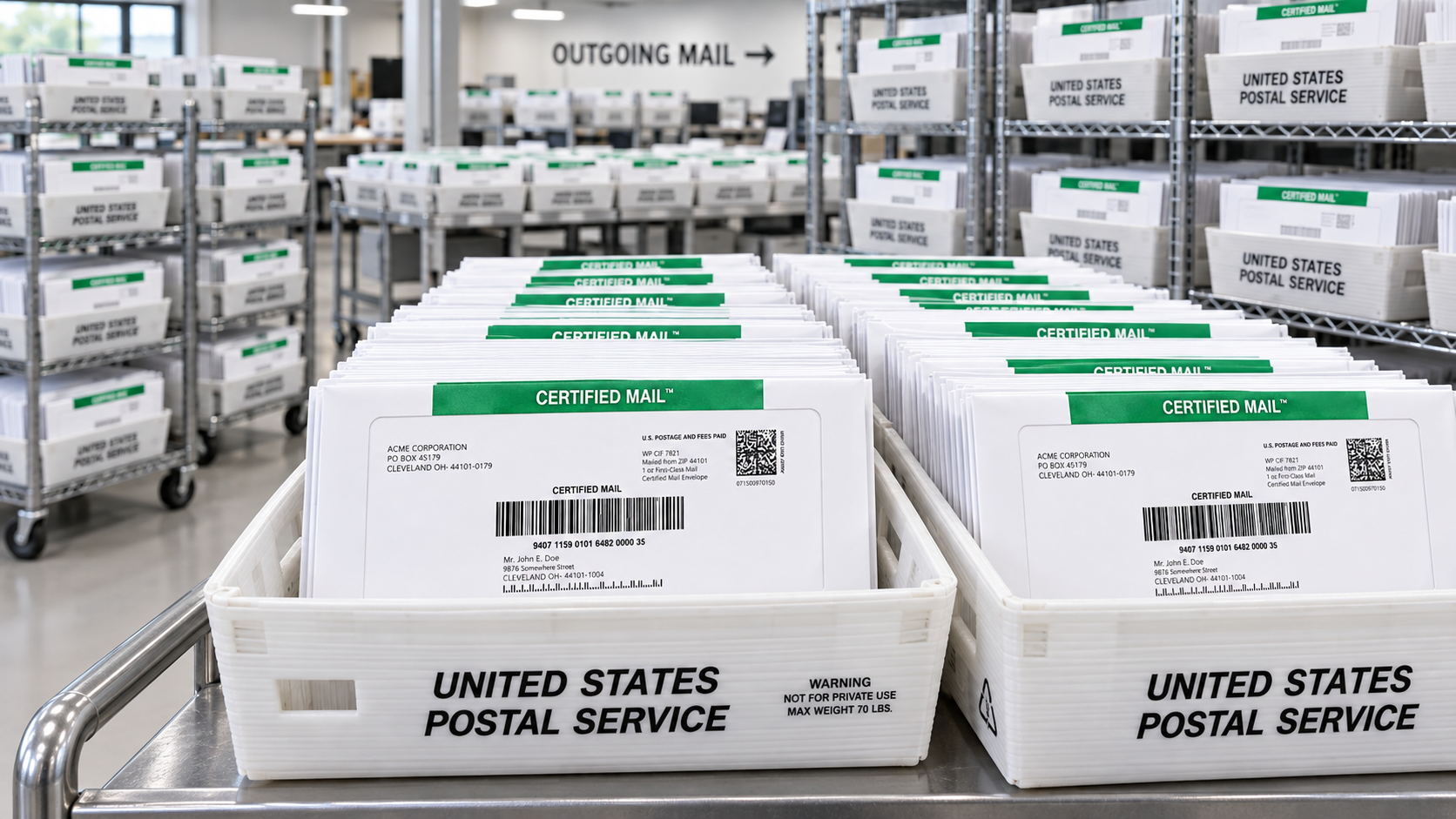
For a high-volume mailing, USPS may use a PS Form 5630 SCAN Form to connect many pieces to one master barcode.
One scan of the SCAN Form can create an acceptance event for the associated shipment. That means a single Certified Mail piece may show limited individual movement while still being part of a mailing with a documented acceptance record behind it.
The USPS Domestic Mail Manual, section 503, describes electronic entry scan procedures and the relationship between the form, electronic file number, and associated pieces. Postal Bulletin 22192 also provides USPS handling instructions for scanning and accepting the form.
For bulk senders, keep both:
- The mailing manifest or electronic file record
- The completed and scanned SCAN Form
This is especially useful for collection agencies, property managers, law firms, financial institutions, and government departments mailing hundreds or thousands of notices.
How Can You Prevent Tracking Panic In The Future?
Build your record before the mailing leaves your office.
With Certified Mail Labels, you can create and print live-postage Certified Mail labels online, or upload your PDF letters and address list for same-business-day Print & Mail when orders are received before 5:00 PM Eastern.
You’ll receive a mailing process designed to keep the important evidence together:
- You’ll get a notarized affidavit of mailing
- You’ll receive USPS acceptance and tracking information
- You can use Electronic Delivery Confirmation
- You can add an Electronic Return Receipt instead of the paper card
- You’ll have a free 10-Year Compliance Archive
- You can search mailing records, acceptance scans, postmarks, tracking, and delivery events
- You won’t need a monthly fee, contract, equipment lease, or complicated office setup
- You won’t need to make a trip to the Post Office for every mailing

How Much Can Electronic Confirmation Save Per Piece?
Here is the simple pricing comparison used for the service:
- Certified Mail: $5.55
- Paper Return Receipt: $4.65
- Electronic Return Receipt: $2.91
- Certified Mail plus paper Return Receipt: $10.20
- Certified Mail plus Electronic Return Receipt: $8.46
- Savings using Electronic Return Receipt instead of paper: $1.74 per piece
The commonly cited $3.74 per-piece gap versus the $11.02 counter rate reflects the electronic-confirmation configuration used in the comparison: $11.02 minus $7.28 equals $3.74. Confirm current prices and the exact service combination at checkout before relying on a rate comparison.
The larger point is simple: electronic records can reduce cost, eliminate paper handling, and make it easier to retrieve proof when a tracking page is incomplete.
What Should Your Compliance Record Contain?
Your strongest file is organized, dated, and searchable.
At minimum, consider retaining:
- The document that was mailed
- The recipient address
- The Certified Mail label and tracking number
- The postmark or USPS acceptance record
- The SCAN Form or manifest for bulk mailings
- The delivery, refusal, unclaimed, or return event
- The Return Receipt or Electronic Delivery Confirmation
- The affidavit of mailing
- Notes about any follow-up inquiry
Certified Mail Labels helps keep these records together for 10 years at no extra charge. You’ll be able to search for proof instead of reconstructing the mailing from scattered files.
Start with Certified Mail Tracking, upload your mailing, and protect the record from the beginning. You’ll save time, save money, and have a clear evidence trail even when USPS Tracking does not show every step.
Frequently Asked Questions
Does Missing Certified Mail Tracking Mean My Letter Was Not Mailed?
No. A missing USPS Tracking scan does not by itself mean the letter was not mailed. Check the Certified Mail receipt, postmark, acceptance record, manifest, SCAN Form, and affidavit of mailing.
How Long Should I Wait Before Checking Certified Mail Tracking Again?
Allow one to two business days for an initial scan or update, especially after a recent mailing. If the status remains incomplete, review your acceptance documentation and then contact USPS or your mailing provider with those records.
Can Certified Mail Be Delivered Without A Delivery Scan?
Yes. USPS Tracking may not display every event, and delivery can occur even when a delivery scan is delayed or not captured. Keep Electronic Delivery Confirmation, a Return Receipt, recipient confirmation, or other supporting documentation when available.
What Is The Difference Between No Scan And No Delivery?
“No scan” means the public tracking record does not show an event. “No delivery” means there is evidence the recipient did not receive the mail or USPS returned it. These are not the same situation.
What Does A USPS SCAN Form Prove For A Bulk Mailing?
A scanned PS Form 5630 SCAN Form can create one acceptance event for all associated pieces in the shipment. Keep the SCAN Form and mailing manifest with the individual piece records.
How Long Does Certified Mail Labels Keep Mailing Records?
Certified Mail Labels provides a free searchable 10-Year Compliance Archive containing mailing records, acceptance scans, postmarks, tracking activity, delivery events, and related proof.
Last reviewed: October 2026
Review this article annually and whenever USPS changes its tracking procedures, SCAN Form mechanics, Certified Mail rules, or rate policy.