
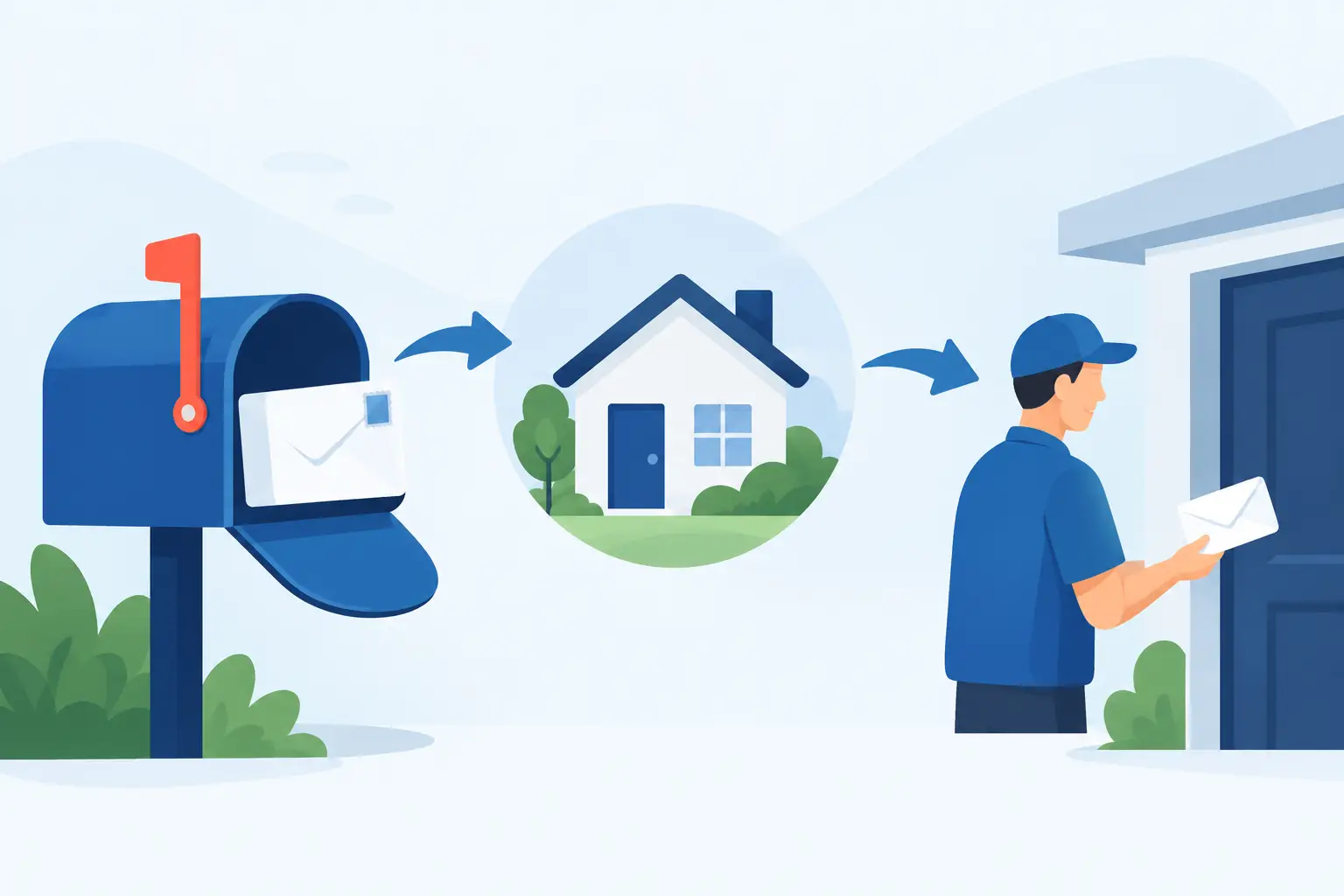
 A Certified Mail letter sent to an address that is no longer current can create an immediate documentation question: Was the item delivered, forwarded, returned, or simply delayed? Certified Mail forwarding may occur when the recipient has an active USPS change-of-address order, but the result depends on the mailpiece, the forwarding order, and the recipient's current delivery status.
For law firms, property managers, accounting offices, government departments, and compliance teams, the practical issue is not just getting the letter to a new address. It is maintaining a defensible record of what was mailed, when USPS accepted it, what happened in transit, and whether delivery was completed. A forwarding event can be part of that record, but it should not be treated as a substitute for accurate addressing or a documented mailing workflow.
What Certified Mail Forwarding Means
Certified Mail is a USPS service that provides a mailing receipt and tracking information for eligible mail. If USPS identifies an active forwarding instruction for the addressee, it may forward the item to the recipient's new address under applicable postal rules.
The sender does not direct the forwarding process. USPS determines whether the piece can be forwarded based on the recipient's filed change of address, the mail class, the address information, and any mailing endorsements or service selections on the envelope. If forwarding is not available or cannot be completed, the piece may be returned to the sender or receive another tracking status that requires review.
This distinction matters in documentation-sensitive mail. Sending an item to a known address is not the same as confirming a recipient still receives mail there. Certified Mail provides evidence of the mailing and its tracked journey, while forwarding is a USPS delivery-handling outcome that may or may not occur.
What Happens When the Recipient Has Moved
When a Certified Mail item enters the USPS network, it is processed using the address printed on the label. If the recipient has moved and has a valid forwarding order, USPS may redirect the item to the new address. Tracking can then show activity associated with the forwarding process before final delivery or return.
The final outcome generally falls into one of three categories. The item may be delivered at the forwarded address, returned because forwarding could not be completed, or remain in transit while USPS processes the redirection. Tracking status is the operational record to review, rather than an assumption based on the original address.
Forwarding can add time to delivery. That is particularly relevant when a notice, demand letter, lease communication, tax correspondence, or other time-sensitive document has a stated response deadline. A sender should build reasonable transit time into the process and monitor the tracking record instead of waiting until a deadline has already passed.
A sender should also understand that a forwarded delivery does not necessarily answer every legal or contractual notice question. Some policies, statutes, contracts, and court rules specify the address or delivery method that must be used. When formal notice requirements apply, follow the governing rule and consult qualified counsel when interpretation is needed.
Forwarding Is Not Address Verification
An active change-of-address order can help USPS redirect mail, but it is not an address-cleaning tool for the sender. It does not confirm that every recipient has moved, that every order is active, or that a forwarded delivery will meet a particular business requirement.
Before preparing a Certified Mail piece, verify the recipient name, delivery address, suite or unit number, ZIP Code, and any attention line needed for internal routing. In a high-volume office, address controls should be part of the mail-preparation process, not a correction made after an item is already in transit.
Tracking and Proof of Delivery After Forwarding
Tracking is especially valuable when forwarding changes the normal delivery path. The tracking history can document USPS acceptance, movement through the network, forwarding-related scans, delivery attempts, final delivery, or return activity. Retain that history with the correspondence record, case file, account file, or notice log.
For mail that requires recipient delivery evidence, add Return Receipt Signature service when available and appropriate. The delivery record can provide the signature image and delivery details associated with the completed item. If a letter is forwarded and delivered, the available proof reflects the final delivery event recorded by USPS.
That is useful, but it has limits. A signature confirms the USPS-recorded delivery transaction; it does not independently establish that a particular individual read the contents, agreed with the contents, or was the person legally required to receive the document. The required level of evidence depends on the purpose of the mailing.
A complete file should include more than the final delivery scan. Keep the Certified Mail tracking number, the date and time the label was created, the mailing receipt or USPS acceptance record, the mailing address used, a copy of the enclosed correspondence, and any Return Receipt Signature documentation. Together, these records create a clearer chain of custody than a delivery status alone.
Prepare for Forwarding Before You Mail
The best response to a potential forwarding issue begins before the envelope is printed. Start with the most current address available from your customer, tenant, client, vendor, or case-management system. If the address has recently changed, document where it came from and when it was last confirmed.
Then prepare the label accurately and retain the mailing data in the same system used to manage the underlying matter. A disconnected process - where labels are printed at one location, receipts are stored in a desk drawer, and correspondence copies are kept somewhere else - creates unnecessary retrieval work when a delivery question arises months later.
Certified Mail Labels supports this kind of controlled workflow by allowing users to create USPS Certified Mail labels online, print postage, track mailpieces, and retain mailing documentation in a centralized record. For recurring mail programs, this can reduce manual form preparation and make it easier to locate the evidence associated with a specific tracking number or recipient.
For a single item, verify the address and retain the acceptance record. For a larger operation, establish a standard procedure that assigns responsibility for address review, label creation, USPS handoff, tracking follow-up, and exception handling. The process does not need to be complicated, but it should be consistent.
Use USPS Acceptance Records to Strengthen the Audit Trail
A label printed with Certified Mail service is not the same as proof that USPS accepted the item. If the mailing must be documented, preserve the USPS acceptance evidence. For multiple items, a USPS SCAN form can provide an efficient acceptance record for a batch of prepared mailpieces.
This is particularly useful for offices that send notices on a schedule, such as monthly delinquency letters, annual compliance notices, renewal communications, or case-related correspondence. Instead of collecting separate counter receipts for every envelope, an organized batch workflow can produce a consolidated acceptance event while retaining individual tracking numbers.
Acceptance records become more important if forwarding occurs. They establish that the item entered the USPS mailstream before the later tracking events. If the recipient moved, the tracking record can show what happened after USPS received the piece without leaving a gap at the start of the chain of record.
How to Handle a Forwarded or Returned Item
When tracking indicates a forwarding-related event, do not immediately resend the same correspondence. First, review the item history and identify the final disposition. A piece still moving through the network may only need monitoring. A delivered item may require filing the proof of delivery. A returned item may require address research and a new mailing decision.
For returned mail, retain the returned envelope and the associated tracking record. The return itself can be relevant evidence that delivery to the original address was not completed. Update the contact record carefully, but do not overwrite the prior address history if it is material to the underlying matter.
If the communication is deadline-driven, document the steps taken after the return or forwarding notice. Record the date the exception was identified, the address source reviewed, any attempted contact, and the decision to resend, use another approved delivery method, or escalate the issue. Consistent exception notes are often more useful than trying to reconstruct events later.
Set a Mail Policy That Matches the Risk
Not every Certified Mail item needs the same treatment. A routine account letter may only require proof of mailing and tracking. A contractual notice, legal demand, regulatory communication, or termination letter may call for stricter address verification, signature service, duplicate delivery methods, or internal approval before release.
The right policy depends on the consequence of non-delivery, the governing notice requirements, the volume of mail, and how quickly your organization must retrieve evidence. Treat forwarding as a possible delivery path, not as the foundation of the policy.
When an address changes, the operational goal is straightforward: preserve the original mailing record, monitor the USPS outcome, and document the next action with the same care used for the initial mailing. That discipline keeps a forwarded Certified Mail item from becoming an avoidable gap in your records.