
Who Sends Certified Mail? Industries and Common Uses
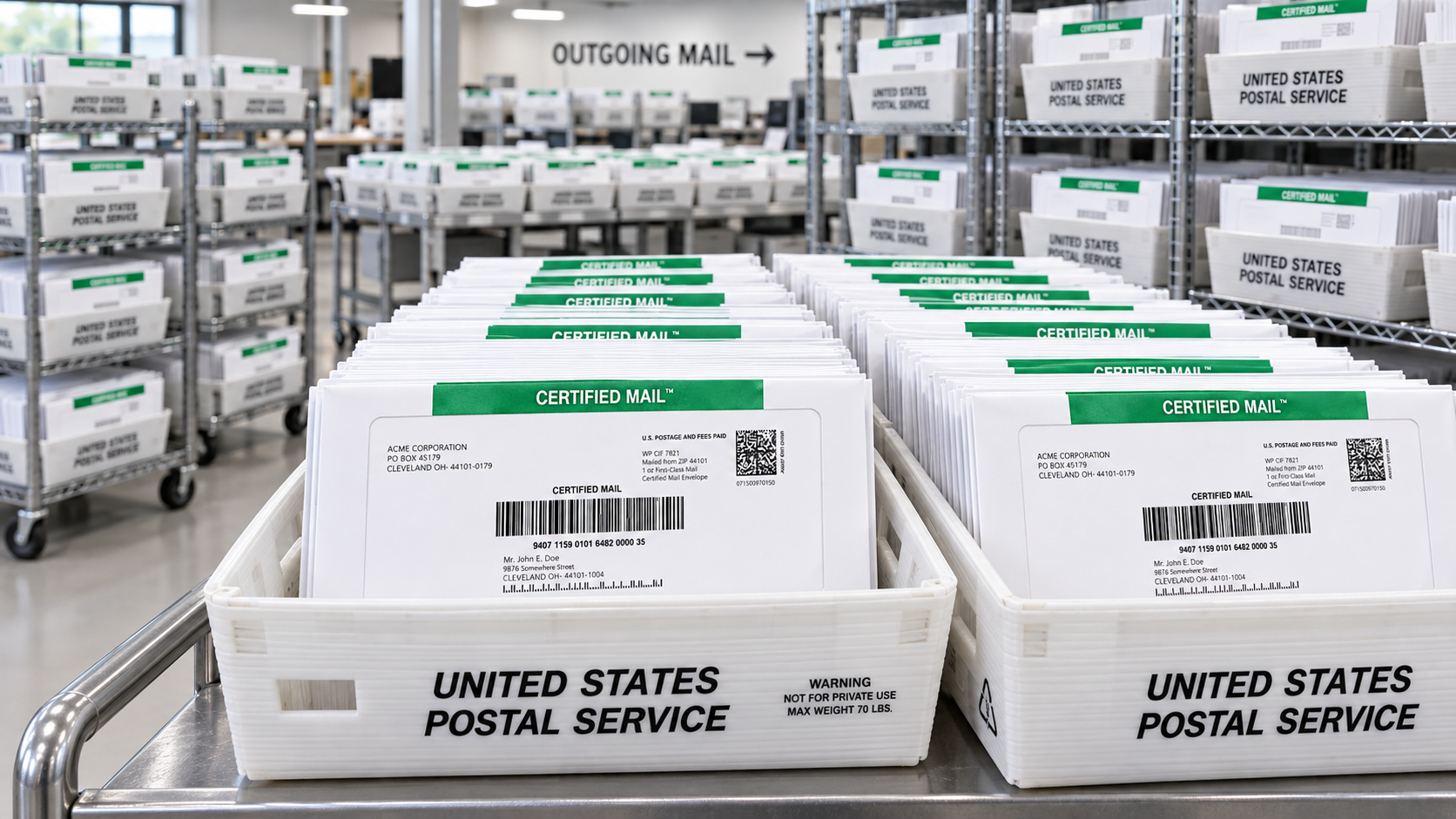 Anyone can send Certified Mail, but the heaviest users are businesses and organizations that must prove a notice was sent and delivered: law firms, government agencies, property managers, HR departments, lenders, insurers, and healthcare providers. They send it because Certified Mail pairs proof of mailing with USPS tracking and a signature at delivery, creating a documented record that holds up in disputes, audits, and court. If you have ever received a certified letter, odds are it came from one of these senders.
What Certified Mail Actually Provides
Certified Mail is an add-on service from the United States Postal Service that gives the sender two certainties:
- Proof of mailing. A receipt documents the date your letter entered the USPS mailstream.
- Proof of delivery. Each piece gets a unique tracking number, and delivery requires a signature, so you can show the letter arrived, or that a documented attempt was made.
Unless the sender adds Restricted Delivery, anyone who receives mail at the address can sign for it. With Restricted Delivery, only the addressee or the addressee's authorized agent may sign. USPS rules also require a return address, so recipients can often see who sent a piece before they sign.
Who Sends Certified Mail, and Why They Send It
Law Firms and Courts
Attorneys send demand letters, court notices, probate correspondence, and service-of-process mail where rules permit it. Certified tracking receipts are accepted as evidence in legal proceedings, which is why litigation teams treat Certified Mail as default for anything time-sensitive.
Government Agencies and Municipalities
Agencies send tax notices, code enforcement letters, hearing notifications, and official correspondence. Documented delivery reduces disputes over whether notice was given.
Property Management Companies
Landlords and property managers send lease violations, notices to vacate, rent demands, and security deposit correspondence. A signature record ends the "we never got that letter" conversation.
HR Departments and Employers
Termination letters, benefits notices, wage notices, and layoff notifications go out with proof attached. For the compliance angle, see our guide to Certified Mail for employment and labor law.
Financial Institutions and Collection Agencies
Lenders and collectors send validation notices, default notices, and foreclosure-related correspondence where documented mailing is part of a defensible process.
Healthcare and Insurance Providers
Payers and providers send policy cancellations, claims correspondence, premium notices, and compliance communications that benefit from verifiable delivery.
Individuals
People send Certified Mail for personal legal matters, notices to landlords or roommates, valuable-item shipments, and any letter whose arrival matters. It is not a government-only service.
Why Senders Choose Certified Mail Over Regular Mail
The consistent thread across every sender type is proof. Certified Mail delivers:
- A mailing receipt showing when the letter was mailed.
- USPS tracking from acceptance scan to delivery or documented attempt.
- A signature record showing someone at the address received it.
- Optional Return Receipt, electronic or paper, capturing the recipient's signature.
- Optional Restricted Delivery when only the named recipient may sign.
Even if a recipient refuses the letter, the tracking record still documents that delivery was attempted and refused. In a dispute, that record matters.
Received Certified Mail Yourself? Here Is the Short Version
Do not panic, and do not ignore it. Most certified letters are routine business correspondence, and refusing or avoiding a letter does not stop the underlying matter, because the delivery attempts are documented. Sign for it, read it, note any deadline, and act. If you want to know what a specific type of letter means, our guides cover IRS Certified Mail and what happens when Certified Mail is not signed for.
Who Sends Certified Mail? The Short Answer
Mostly businesses and organizations with a legal or compliance reason to prove notice, plus individuals who want certainty. Anyone can send it, and with online printing you no longer need a Post Office trip to do it well.
Send Your Own Certified Mail Online, in Minutes
Ready to join the senders who never wait in a Post Office line again? With Certified Mail Labels you can:
- Create and print live-postage Certified Mail labels online from home or office.
- Save money versus Post Office counter rates on every mailing.
- Get Electronic Delivery Confirmations, Return Receipt signatures, and tracking by email.
- Keep every proof in a complimentary 10-year compliance archive.
- Upload a letter and address list for same-business-day Print & Mail service, or automate at scale with Excel batch labels and API and SFTP automation.
No monthly fees, no contracts, no equipment leases, no postage meter. Current pricing is always at USPS Certified Mail rates. Start with a free account today and send your first label in minutes.
Who sends Certified Mail?
Law firms, government agencies, property management companies, HR departments, financial institutions, collection agencies, insurance and healthcare providers, and individuals send Certified Mail. They use it when proof of mailing and proof of delivery matter, because Certified Mail provides USPS tracking and a signature at delivery that documents the notice was sent and received.
Why do businesses send letters by Certified Mail?
Businesses send Certified Mail to create verifiable proof that important notices were mailed and delivered. The mailing receipt, tracking history, and delivery signature help resolve disputes, satisfy compliance documentation, and support the sender's position in audits or legal proceedings if a recipient claims notice was never given.
Can anyone send Certified Mail, or is it only for legal purposes?
Anyone can send Certified Mail. While law firms and agencies are frequent users, individuals use it for personal legal notices, important documents, and anything whose arrival they want confirmed. No special account, business registration, or legal purpose is required to use the service.
What does it mean if you receive Certified Mail?
Receiving Certified Mail means a sender wanted documented proof that the letter reached you. Common senders include attorneys, courts, government agencies, lenders, employers, and landlords. It is not always bad news, but it usually signals the sender needs proof of delivery, so sign for it promptly, read it fully, and note any deadline.
Can a recipient refuse Certified Mail and claim they never got it?
A recipient can physically refuse Certified Mail, but the refusal and every delivery attempt are documented in USPS tracking records. In a dispute, those records demonstrate that the sender attempted delivery, so refusal generally does not erase the proof the sender was trying to create.
How do I send Certified Mail without going to the Post Office?
Create and print live-postage Certified Mail labels online, attach one to your envelope, and place it in any mailbox or collection box. Online services like Certified Mail Labels provide tracking, Electronic Delivery Confirmations, Return Receipt signatures, and a 10-year compliance archive, with no monthly fees, contracts, or special equipment, at rates below Post Office counter prices.