
Is a Certified Letter Bad News? A Complete Guide
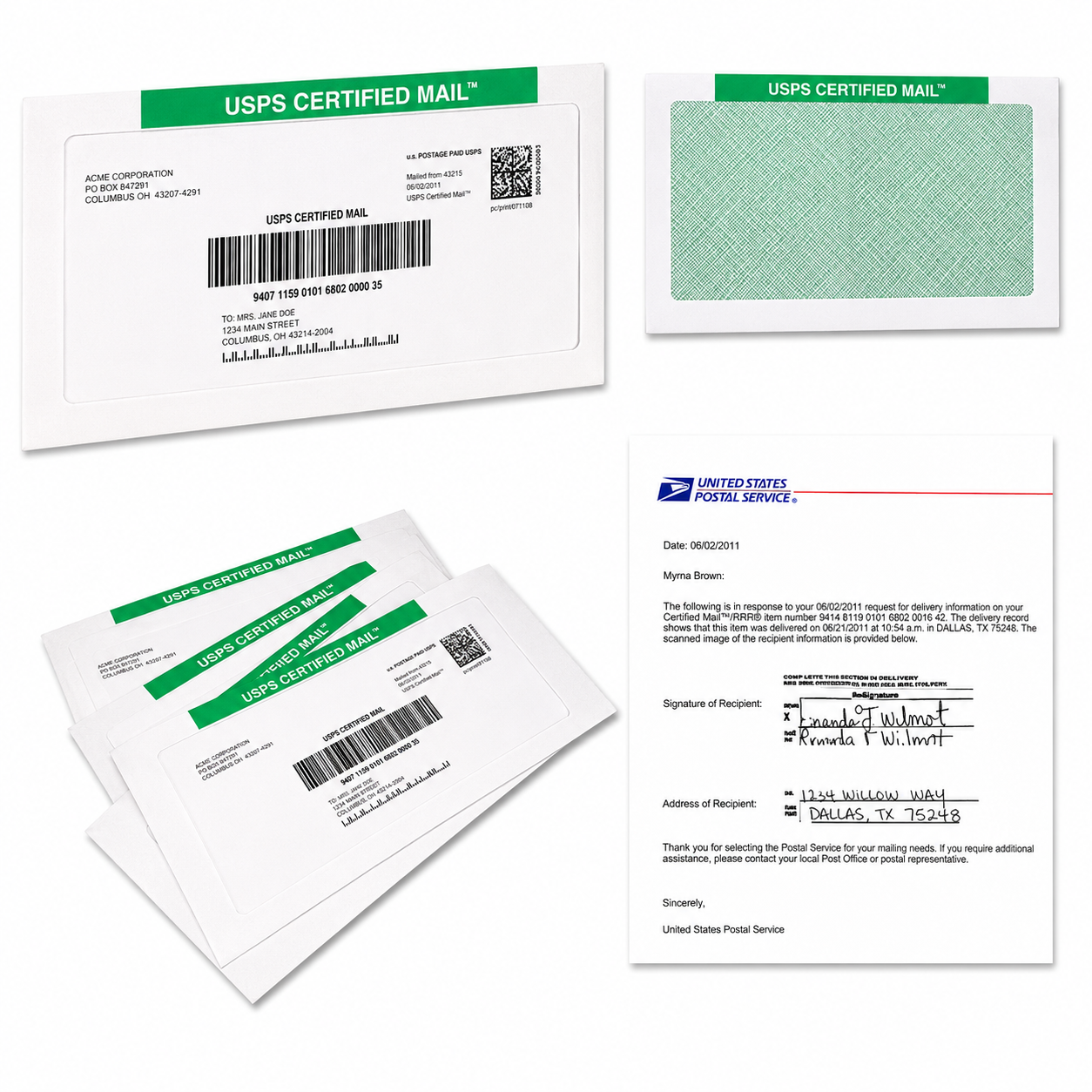 No, a certified letter is not automatically bad news. Certified Mail is simply the delivery method senders choose when they need proof that a document reached a specific person. Governments, law firms, banks, and businesses all use it for routine, required, and sometimes genuinely good news, like an inheritance notice or a loan approval. What matters is who sent it and what it says, not the envelope.
This page covers who sends certified letters, the good reasons you might receive one, how to read the signals, and what to do when one arrives.
Why the Envelope Makes People Nervous
Most everyday mail is advertising and bills. So when something arrives that requires a signature, it stands out, and the common assumption is that signature-required mail means trouble: a court case, a tax problem, a debt. That assumption is understandable but incomplete. Signature-required mail means the sender wanted certainty, and certainty is used for good news just as often as bad.
Who Sends Certified Letters?
Government Agencies
Federal, state, and local agencies use Certified Mail for official correspondence: tax notices, benefit determinations, licensing updates, and court-related mail. Some of it is routine; some of it carries deadlines. Either way, it is worth opening.
Legal Professionals
Lawyers send Certified Mail for pending lawsuits, court hearings, estate matters, settlement notices, and other legal communications that require documented delivery. Estate notices are a classic example of Certified Mail carrying genuinely good news.
Financial Institutions
Banks, lenders, and insurers use Certified Mail for account term changes, loan approvals, mortgage updates, and policy documents that require the customer's acknowledgment.
Businesses and Individuals
Employers send policy updates and employment documents. Landlords send lease notices. Individuals send important personal documents when they want certainty of arrival.
Good Reasons You Might Receive a Certified Letter
- An inheritance or estate distribution: attorneys use Certified Mail to notify heirs, which is usually welcome news.
- A loan or credit approval: lenders send approval documents requiring acknowledgment.
- An expected delivery: an important document or item you were already anticipating, sent with signature confirmation for security.
- A benefits or entitlements update: agencies confirming status, eligibility, or obligations.
- Good-faith business notices: contract renewals, policy updates, or verification documents you need on file.
How to Read the Signals Before You Open It
While the sender's name on the notice is the first clue, a few signals help you anticipate what is inside:
- Who sent it: a government agency, court, or law firm usually means an official matter with possible deadlines. A business you know may simply be documenting delivery.
- Accompanying documents: if the notice references proceedings, account balances, or required actions, expect substance.
- Tone and formatting: formal legal language, reference numbers, and response deadlines indicate time-sensitive material.
None of these signals tell you whether the news is good or bad. They tell you how quickly to open it.
What to Do When a Certified Letter Arrives
- Sign for it and open it promptly. Refusing or ignoring it does not make the underlying matter disappear, and in legal matters, deadlines usually keep running whether or not you sign. Once you sign, you cannot un-sign, so the sooner you know, the sooner you can respond.
- Read it fully and note any dates. Identify every deadline, required action, and contact reference in the letter.
- Get professional advice if it involves legal or financial consequences. If the letter involves a lawsuit, tax matter, eviction, foreclosure, or debt, confirm your options and deadlines with an attorney or qualified professional in your state.
- Respond in writing where appropriate. Keep copies of anything you send, and consider sending your response with the same proof-of-delivery care the sender used.
- Take care of yourself. If the news is genuinely bad, give yourself room to process it before acting, and lean on trusted friends or family for support while you work through the practical steps.
Sending Certified Mail Yourself
If you are on the sending side, Certified Mail is how you make sure an important document provably arrives. With Certified Mail Labels, you address and print USPS Certified Mail labels online and skip the Post Office trip entirely. You get proof of mailing, letter tracking, delivery confirmation, Return Receipt options including the Electronic Return Receipt, and email notifications when each letter is delivered, all stored in a free 10-year compliance archive. There are no monthly fees, no contracts, and no software or special equipment to buy.
For bulk correspondence, Excel batch labels create multiple labels at once, API and SFTP automation handles enterprise volume with USPS SCAN Forms, and our Print & Mail service prints, inserts, and hands your letters to USPS the same business day for orders placed by 5:00 PM Eastern, with a notarized affidavit of mailing.
FAQ: Receiving a Certified Letter
Is a certified letter always bad news?
No. Certified Mail is a delivery method chosen when the sender needs proof of delivery, and it is used for good news as often as bad: estate notices, loan approvals, benefit updates, and routine business correspondence all arrive this way. The envelope tells you nothing about the contents until you open it.
Who typically sends certified letters?
Government agencies, law firms, courts, financial institutions, employers, landlords, and businesses that need documented proof that a specific document reached a specific recipient. Any sender who requires delivery confirmation may use Certified Mail.
Should I sign for a certified letter if I'm worried about it?
Yes. Signing for it does not create any obligation beyond acknowledging receipt, and refusing does not make the underlying matter go away. In legal matters, deadlines typically keep running whether or not you sign, so it is better to know what the letter says.
What happens if I ignore a certified letter?
The sender receives a record of the delivery attempts, and the underlying issue continues: deadlines keep running, and senders can escalate to alternative service methods or further action. Ignoring the letter usually leaves you with less information and fewer options than opening it.
Can a certified letter be good news?
Yes. Common examples include notice of an inheritance, approval of a loan or benefit application, and confirmations of documents you were already expecting. Certified Mail simply guarantees the sender can prove delivery.
What should I do first after signing for a certified letter?
Open it promptly and read it fully. Note every deadline and required action, and if the letter involves legal or financial consequences, confirm your options with an attorney or qualified professional in your state before responding.